Spain does not have one nationwide “street food” culture built around food carts on every corner. Much of the country’s best casual food is eaten in bars, bakeries, markets, fairs and small takeaway counters. That distinction matters: searching only for literal street stalls can make you miss the foods people actually eat on the go.
This Spanish street food guide covers portable snacks, market foods and quick regional bites that fit naturally into a day of sightseeing.
For the bigger picture, our Spain Travel Guide connects food with cities, islands, transport and practical itinerary planning.
What to order for a snack or a quick meal
A useful first choice is whether you want food to take away or a place to pause. A bocadillo, empanada or pastry is usually easier to carry; bravas, croquetas and several shared plates work better with a table or a bar counter. Ask for para llevar if you want takeaway rather than assuming packaging is included.
- For a quick breakfast: compare the bakery’s pastries with churros at a café, then check whether drinks are priced separately.
- For lunch on the move: start with a filled bocadillo or a slice of empanada and check the portion before ordering more.
- For a tasting stop: order one or two small dishes, then add another if you are still hungry. Several small portions can cost more than a simple meal.
- For regional variety: choose a local specialty from the guide below rather than expecting every city to serve the same snacks.
1. Bocadillo de calamares — Madrid
A simple fried-squid sandwich strongly associated with central Madrid. Around Plaza Mayor you will see many versions; compare freshness and turnover rather than automatically choosing the busiest tourist doorway.
2. Tortilla pincho
A slice of Spanish tortilla is one of the country’s most common quick bar foods. It is portable, inexpensive relative to a full meal and available far beyond tourist areas.
3. Croquetas
Croquetas are not truly “street food” in the cart sense, but they are a classic small plate and increasingly common in food markets and takeaway counters.
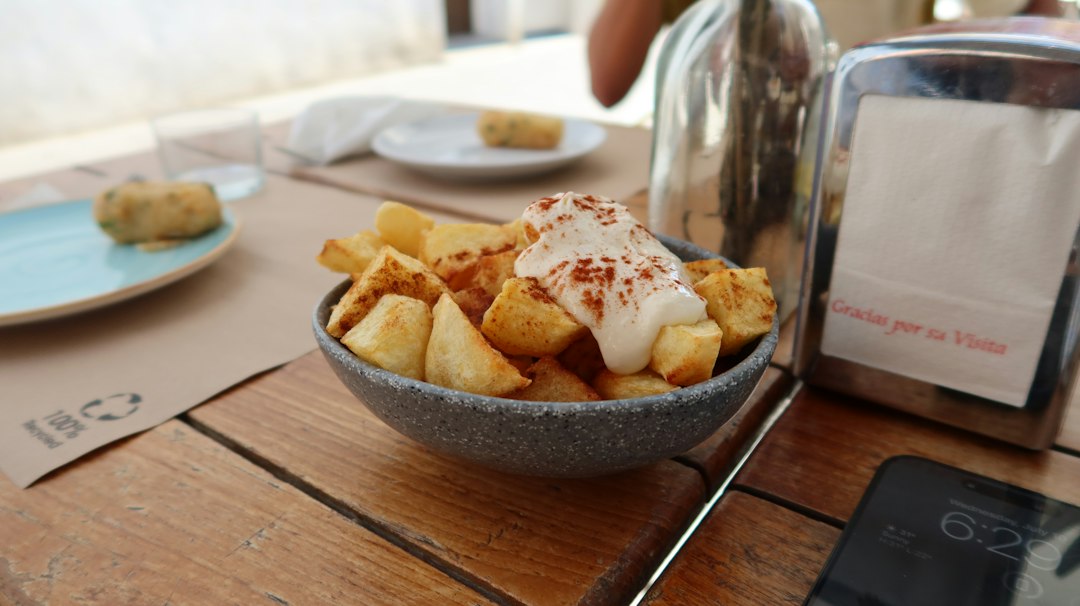
4. Patatas bravas
Best eaten at a table or standing at a bar rather than while walking, but bravas belong in any guide to casual Spanish eating. Sauce styles vary significantly by city and bar.
5. Empanadas
Galician-style empanadas and smaller individual versions are easy takeaway foods. Fillings range from tuna and peppers to meat or vegetables.
6. Churros and porras
Churros are eaten for breakfast, late-night snacks and festival food depending on the region. In Madrid, thicker porras are also common. Chocolate is popular but not compulsory.
7. Bocadillos
Spain’s sandwich culture goes far beyond calamari. Jamón, tortilla, cheese, pork loin and regional fillings turn bakeries and bars into some of the easiest places for an inexpensive lunch.
8. Pintxos — Basque Country
Pintxos are small bar bites rather than literal street food. In cities such as San Sebastián and Bilbao, moving between bars and trying one or two specialties in each is part of the experience.
9. Pescaíto frito — Andalusia
Fried fish is common in southern coastal areas and may be served in simple paper portions or casual restaurants. Freshness and local fish matter more than a generic “fried seafood” label.
10. Montaditos
Small sandwiches or topped pieces of bread appear across Spain in many forms. They are useful for tasting several flavors without ordering a full meal.
11. Market olives, cheese and cured meats
Food markets can be excellent places to sample ingredients, but distinguish between working neighborhood markets and tourist-focused gourmet halls. Both can be enjoyable; they simply offer different experiences.
12. Regional pastries
Local bakeries often provide some of the most authentic portable food on a trip: ensaimadas in Mallorca, sobaos in Cantabria and many region-specific pastries are easier to understand in their home region.
Food markets: useful, but not the whole story
Madrid’s San Miguel and San Antón markets offer different settings for tasting food: the first is beside Plaza Mayor, while the second combines food shopping and dining spaces in Chueca. San Ildefonso, on Calle Fuencarral, follows a street-food market concept with Spanish and international choices. Check each venue’s current opening information before building your day around it.
Use markets to sample widely, then also eat in ordinary neighborhood bars and bakeries.
How to find good casual food in Spain
- Look for short menus and high turnover.
- Do not judge quality only by whether a place is on a famous square.
- Ask what is regional rather than ordering the same tapas everywhere.
- Use bakeries and markets for quick breakfasts and lunches.
- Remember that dinner hours are later than in many countries.
How to order without confusing portions
Tapa, pincho or pintxo, media ración and ración describe different serving formats, but quantities vary by venue. Treat the menu and the server’s explanation as the guide. A ración is commonly ordered to share; it is not a fixed number of pieces everywhere.
Do not assume a snack comes free with your drink. Ask what is included and check whether a displayed price is per item, per portion or by weight. In a busy market, decide on one savory dish first and compare the cost of a drink and another portion before turning a snack into lunch.
Simple Spanish phrases that help
- ¿Es para compartir? — Is it for sharing?
- ¿El precio es por unidad o por ración? — Is the price per item or per portion?
- ¿Se puede pedir para llevar? — Can I order it to take away?
- ¿Qué lleva? — What ingredients does it contain?
If an ingredient is unsuitable for you, explain that before ordering and ask the staff to confirm with the kitchen. A vegetable-looking topping or filling does not tell you everything about the stock, sauce or preparation.
Regional food guides
If you are traveling in northern Spain, continue with our Cantabria Food Guide. For Madrid planning, see our Madrid Travel Guide.
Last reviewed: September 2026.