Recommended for you
The Ultimate Barcelona Travel Experience: My Personal Journey
My Honest Cantabria Food Guide: A Culinary Journey Through Northern Spain
Spain has always held a special place in my heart, but nothing prepared me for the culinary awakening I experienced in the north. The idea of putting together a definitive Cantabria food guide wasn’t on my mind when I first stepped off the train in Santander. I simply wanted to eat well and explore. Yet, the sheer depth of flavors, the uncompromising quality of the ingredients, and the warmth of the locals made compiling a Cantabria food guide an absolute necessity for me. Whenever people ask me about my travels in Spain, they usually expect stories of paella in Valencia or tapas in Andalusia. Instead, I immediately hand them my personal Cantabria food guide, insisting that the true soul of Spanish gastronomy hides where the rugged Picos de Europa mountains crash into the wild, restless Atlantic. Writing this Cantabria food guide has been a labor of love, a way to document a regional cuisine that celebrates the purity of local ingredients with fierce, almost poetic pride. If you are looking for an authentic, unpretentious, and unforgettable gastronomic adventure, this Cantabria food guide is my personal diary of the best bites the north has to offer.
The Unexpected Beginnings of My Cantabria Food Guide
When I arrived in Santander, the capital of the region, the morning mist was still clinging to the grand Belle Époque buildings lining the bay. I had a small notebook in my pocket, which would soon become the draft for this very Cantabria food guide. I sat down at a small, unassuming café near the port and ordered a strong espresso. It was here that I realized any serious Cantabria food guide must start with the humble beginnings of a local morning. The Basque Country and Galicia often steal the international spotlight, but as I sipped my coffee, a local fisherman struck up a conversation with me. He told me that if I truly wanted to understand the region, I had to eat like a Cantabrian. That single conversation became the catalyst for my Cantabria food guide. I decided then and there to spend the next month eating my way through the coastlines and valleys, ensuring that my Cantabria food guide would be rooted in genuine, lived experiences rather than superficial tourist recommendations.
The first rule I established for my Cantabria food guide was simple: follow the locals. I wandered into the Mercado de la Esperanza, a towering iron and glass structure that hums with the chaotic energy of daily trade. To create a comprehensive Cantabria food guide, you have to understand the raw materials. The fishmongers were proudly displaying their morning catch—glistening hake, massive turbot, and delicate squid. I spent hours taking notes for my Cantabria food guide, asking the vendors how they prepared their meals at home. Their answers were invariably simple: a little olive oil, a touch of garlic, and perhaps a splash of white wine. This philosophy of minimal intervention became a cornerstone of my Cantabria food guide. Why mask the flavor of something that was swimming in the Cantabrian Sea just hours ago?
Santoña and the World’s Best Anchovies
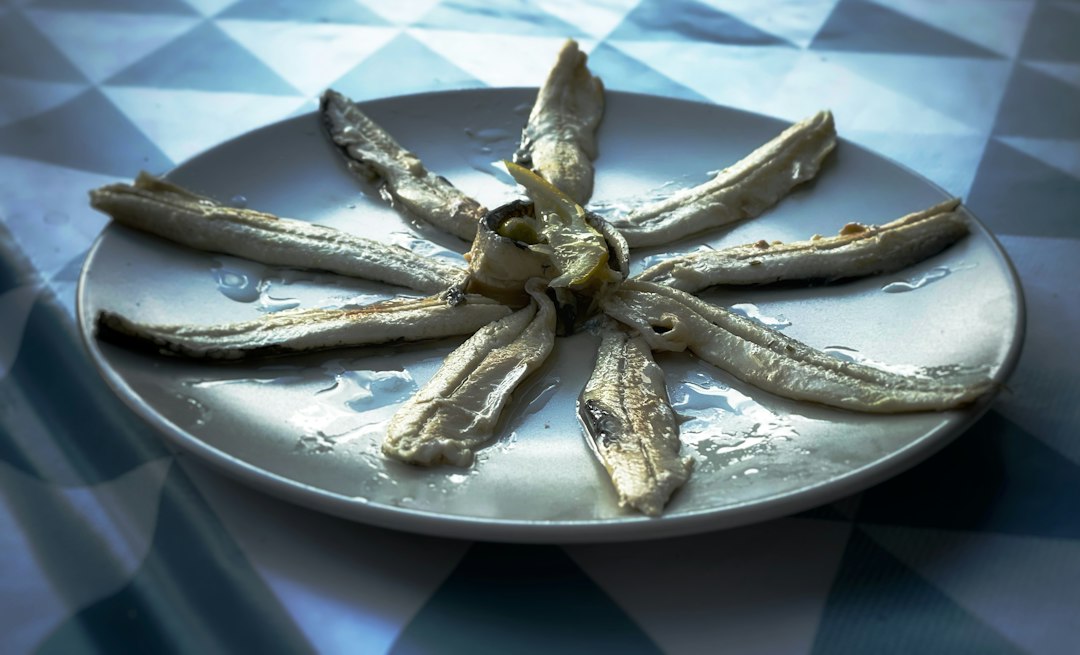
No Cantabria food guide could ever be considered complete without a pilgrimage to Santoña. This coastal town is the undisputed world capital of anchovies, and I knew I had to dedicate a massive section of my Cantabria food guide to this delicacy. Before this trip, my experience with anchovies involved overly salty, dry, and rather unpleasant little fillets thrown onto cheap pizzas. The anchovies I encountered while researching this Cantabria food guide shattered that preconceived notion completely. In Santoña, preserving anchovies is not just an industry; it is a revered, artisanal craft. I was lucky enough to tour a small, family-run facility, a story I always highlight when sharing my Cantabria food guide with fellow travelers.
The women working in the factory fileted the fish by hand with astonishing speed and precision. They explained to me that the fish are caught only during the spring campaign, salted, pressed, and left to mature for months. When they finally presented me with a freshly packed fillet, dripping in golden olive oil, it was a revelation. It was buttery, deeply savory, and melted on the tongue without a hint of harsh fishiness. I immediately wrote down in my Cantabria food guide: “Never underestimate the Santoña anchovy.” I spent the rest of the afternoon sitting on a sunlit terrace by the port, eating plate after plate of these magnificent fillets accompanied by crusty bread. For anyone reading this Cantabria food guide, make sure you buy the premium, hand-packed tins. They are expensive, but as my Cantabria food guide constantly emphasizes, they are worth every single euro.

The Tuna of the North: A Staple of the Cantabria Food Guide
As I continued my coastal journey, another oceanic treasure commanded my attention, cementing its place in my Cantabria food guide: the Bonito del Norte. Caught in the cold waters of the Cantabrian Sea during the summer, this white tuna is a prized delicacy. While building my Cantabria food guide, I made it a mission to try Bonito in every conceivable preparation. Whether it was grilled perfectly a la plancha, leaving the center slightly rare like a fine steak, or gently preserved in glass jars, its texture and flavor were unmatched. One evening, in a small tavern in San Vicente de la Barquera, I was introduced to a dish that completely transformed my Cantabria food guide: Sorropotún.
Sorropotún, or Marmita as it is sometimes called, is a traditional fisherman’s stew. It is a humble, steaming pot of fresh bonito chunks, soft potatoes, slow-cooked onions, green peppers, and tomatoes. The broth was rich and comforting, carrying the essence of the sea. I sat by the window watching the fishing boats bob in the harbor as I ate, realizing that this dish alone justified the existence of my Cantabria food guide. It was honest food, born of necessity and elevated by the absolute freshness of the ingredients. I noted in my Cantabria food guide that travelers must seek out these local stews, as they tell the story of the maritime culture far better than any fancy, deconstructed restaurant plate ever could. It is this authenticity that I want every reader of my Cantabria food guide to seek out.
Leaving the Coast: The Mountain Heart of My Cantabria Food Guide
While the seafood is spectacular, a true Cantabria food guide must venture inland. The transition from the breezy coast to the dramatic, jagged peaks of the Picos de Europa is breathtaking. As I drove my rental car up the winding mountain roads, the temperature dropped, the mist rolled in, and the culinary landscape shifted dramatically. The coastal notes in my Cantabria food guide were soon replaced by entries detailing hearty, robust mountain fare designed to sustain shepherds through harsh winters. This duality is what makes researching a Cantabria food guide so infinitely fascinating. You can eat delicate squid at sea level for lunch and a massive, calorie-dense pork and bean stew in a stone cabin for dinner.
The absolute king of the mountain dishes, and a mandatory entry in any Cantabria food guide, is the Cocido Montañés. I tasted my first authentic Cocido Montañés in a tiny village called Bárcena Mayor, surrounded by ancient forests and cobblestone streets. Unlike the stews of central Spain, this dish does not rely on chickpeas. Instead, as I meticulously recorded for my Cantabria food guide, it features incredibly creamy white beans, locally grown collard greens, and the “compango”—a glorious assortment of meats including smoky blood sausage, spicy chorizo, and tender pork ribs. The woman who served me told me the stew had been simmering over a wood fire since dawn. It was rich, smoky, and overwhelmingly comforting. I promised myself right then that my Cantabria food guide would urge every visitor to make the trek up into the valleys just for this dish.
The Liébana Valley: A Distinctive Chapter in the Cantabria Food Guide
My exploration did not stop there. To make my Cantabria food guide as comprehensive as possible, I headed west to the Liébana Valley. This microclimate hidden behind towering peaks has its own distinct culinary identity, earning a special chapter in my Cantabria food guide. Here, the reigning champion of the table is the Cocido Lebaniego. It is a fascinating variation that swaps the white beans of its mountainous cousin for small, nutty chickpeas. As I sat in a rustic tavern in Potes, updating my Cantabria food guide, I savored the different texture and flavor profile. The broth was slightly lighter but no less flavorful, often served with a side of cabbage and a rich stuffing made of bread crumb, egg, and chorizo.
Beyond the stews, the Liébana Valley introduced another critical element to my Cantabria food guide: the local cheeses. The emerald-green pastures of Cantabria produce some of Spain’s finest milk, leading to an exceptional variety of dairy products. I spent an entire afternoon at a small dairy farm, adding detailed tasting notes to my Cantabria food guide. I tried the Quesucos de Liébana, small, lightly smoked cheeses that pack an incredible punch of flavor. They were earthy and complex, reflecting the very soil of the valley. Later, I sampled the Queso de Nata, a creamy, mild cow’s milk cheese that melted beautifully on fresh bread. Writing my Cantabria food guide, I realized that the region’s cheeses are criminally underappreciated internationally, and I made it my personal crusade to change that through my writing.

Sweet Traditions: Baking the Cantabria Food Guide
After weeks of rich stews and savory seafood, I found myself craving something sweet, which led to the next essential section of my Cantabria food guide. The Pas valleys (Valles Pasiegos) are the epicenter of Cantabrian baking. The dairy tradition here translates directly into heavily buttered, incredibly rich desserts. I dedicated a full morning to researching this for my Cantabria food guide by visiting a traditional bakery in Selaya. The smell of baking butter and sugar hit me before I even opened the door. This sensory experience is something I passionately try to convey in my Cantabria food guide. The baker introduced me to the two pillars of local confectionery: Sobaos Pasiegos and Quesada Pasiega.
The Sobaos are rich, buttery sponge cakes with a dense, moist crumb. They are traditionally eaten for breakfast, dipped into a large bowl of hot milk or coffee. As I sat in the bakery, dunking a massive Sobao into my coffee, I knew my Cantabria food guide was hitting a sweet peak. It was simple, unpretentious perfection. The Quesada, on the other hand, is a dense, pudding-like cheesecake made with fresh curd, eggs, sugar, and a hint of lemon zest. It has a beautiful, slightly burnt top and a creamy interior. I ended up buying a whole box to take with me, snacking on them as I drove and constantly adding enthusiastic praise to the sweets section of my Cantabria food guide. For any traveler with a sweet tooth, this part of the Cantabria food guide is an absolute must-read.
Dining Scenes: From Rustic Taverns to Michelin Stars
As my journey neared its end, I realized that my Cantabria food guide needed to address the sheer variety of dining environments available. The magic of this region is that you can experience extraordinary gastronomy at any price point. To ensure my Cantabria food guide was balanced, I spent my final week alternating between humble, sawdust-on-the-floor taverns and some of the region’s most celebrated fine-dining establishments. I wanted my Cantabria food guide to prove that culinary excellence here is not restricted to white tablecloths; it is a cultural baseline. In Santander, I frequented places like Bodega del Riojano, an institution that features massive wine barrels painted by famous artists. Eating their traditional dishes felt like stepping back in time, an experience I highly recommend in my Cantabria food guide.
But my Cantabria food guide would be remiss if I ignored the region’s vanguard. Cantabria boasts a surprising number of Michelin stars for its size. I treated myself to a tasting menu at a highly acclaimed restaurant, where the chef reinterpreted the rustic flavors I had been eating all month into avant-garde masterpieces. A deconstructed version of a mountain stew, an ethereal emulsion of local cheese—it was mind-blowing. Yet, as I noted in my Cantabria food guide, even at this elevated level, the chefs never lost sight of the local ingredients. The respect for the sea and the mountain remained paramount. This juxtaposition of traditional heart and modern technique is exactly what makes writing a Cantabria food guide so thrilling. It is a region that respects its past while confidently moving into the future.
Drinking the Landscape: Cider and Wine in My Cantabria Food Guide
Food is only half the story, and I quickly learned that my Cantabria food guide needed a dedicated section on libations. While neighboring Asturias is world-famous for its cider, Cantabria shares this deep-rooted tradition. In the rural taverns, I watched locals pouring natural, uncarbonated cider from high above their heads to aerate the liquid before it hit the glass. This theatrical pour, known as “escanciar,” became a regular spectacle during my dinners. I documented in my Cantabria food guide how the tart, dry flavor of the cider cuts perfectly through the rich fats of the mountain stews and cured meats. It is a harmonious pairing that I insist everyone tries when following my Cantabria food guide.
Additionally, my Cantabria food guide touches upon the local wines, particularly those from the Costa de Cantabria geographic indication. The crisp, acidic white wines produced near the sea are the ultimate companions to the fresh seafood. Sitting at a coastal bar, sipping a chilled local white while eating freshly grilled sardines, I felt a profound connection to the landscape. I want my Cantabria food guide to help travelers recreate these exact moments of quiet, culinary bliss. It is not just about fuel; it is about consuming the very essence of the region.
Final Reflections on My Cantabria Food Guide
Reflecting on the month I spent compiling this Cantabria food guide, I am struck by how deeply personal the journey became. Food is the ultimate lens through which to view a culture, and this Cantabria food guide is my testament to the proud, hardworking people of northern Spain. From the fishermen braving the cold Atlantic to the shepherds tending their flocks in the misty Picos de Europa, every dish tells a story of survival, tradition, and profound respect for nature. My Cantabria food guide is not just a list of restaurants; it is a narrative of my own personal discovery. It is the story of how a traveler can arrive seeking a meal and leave having found a deep, lasting connection to a place.
To anyone planning a trip to Spain, I urge you to look beyond the typical tourist circuits. Take this Cantabria food guide, rent a car, and drive up the northern coast. Get lost in the winding mountain roads, walk into the loudest, most crowded taverns you can find, and order whatever the person next to you is eating. I guarantee that the experiences you have will echo the pages of my Cantabria food guide. You will taste the salt of the sea, the smoke of the hearth, and the unmistakable flavor of authenticity. Thank you for joining me on this journey, and I sincerely hope my Cantabria food guide leads you to your own unforgettable culinary adventures.