Recommended for you
The Great Dilemma: How I Decide to Book a Hotel Online or In Person
I still remember the freezing rain in Berlin the night my travel philosophy changed forever. Standing under the flickering neon sign of a small, family-run guesthouse near Alexanderplatz, my phone battery was clinging to a mere two percent. I was shivering, completely exhausted from a fourteen-hour transit, and faced with the ultimate traveler’s question: do you book a hotel online or in person? It sounds like a simple logistical choice, but for anyone who spends a significant portion of their life living out of a suitcase, the decision to book a hotel online or in person is deeply personal. Over the years, I have realized that choosing to book a hotel online or in person is not just about saving a few dollars; it is about how you want to experience the world, how you handle uncertainty, and how much trust you place in digital screens versus human faces.
Whenever I prepare for a new adventure, my friends constantly ask me for my secret formula. They want to know the absolute truth about whether they should book a hotel online or in person. They assume there is a mathematical equation, a flawless algorithm that will perfectly dictate when to book a hotel online or in person to guarantee the cheapest rate and the softest pillows. The reality, which I have learned through trial, error, and many uncomfortable nights, is that the choice to book a hotel online or in person is highly situational. There have been nights where my stubborn refusal to just book a hotel online or in person the traditional way led to disaster, and other nights where walking boldly into a lobby secured me an executive suite for the price of a broom closet. Let me take you through my journey of discovering exactly what happens when you book a hotel online or in person.
My Early Days of Navigating Accommodations
When I first started traveling independently, the internet was not the all-consuming force it is today. To book a hotel online or in person wasn’t even a debate; you either called a travel agent, or you showed up with a guidebook in hand and hoped for the best. I remember my first backpacking trip across Italy. I didn’t even have the option to easily book a hotel online or in person via an app because smartphones weren’t ubiquitous. I would step off a train in Florence or Rome, strap on my ridiculously oversized backpack, and start walking. The choice to book a hotel online or in person was made for me by necessity. I had to walk in. I had to look the receptionist in the eye, ask about the rates, and sometimes respectfully negotiate. That raw, face-to-face interaction taught me the baseline value of hospitality. You quickly learn that when you book a hotel online or in person, the human element can dramatically alter your stay.
As technology advanced, the temptation to strictly book a hotel online or in person via third-party apps became overwhelming. Suddenly, I had the power to view hundreds of properties from the comfort of my departure gate. I could filter by price, distance, and guest ratings. I convinced myself that it was absolute foolishness to do anything other than tap my screen to secure a room. I thought I had hacked the system, believing that anyone who didn’t exclusively rely on digital platforms to book a hotel online or in person was living in the dark ages. But my blind faith in digital convenience was soon put to the test. I found myself obsessing over the booking direct vs booking com debate, realizing that the shiny interfaces sometimes hid crucial details about the actual rooms.

During a particularly chaotic trip to Tokyo, I was forced to re-evaluate my stance. The cherry blossoms were in full bloom, and the city was packed to the brim with tourists. I had decided to book a hotel online or in person upon arrival, feeling confident in my app-savvy skills. I sat in a bustling café in Shinjuku, refreshing my screen repeatedly. Every affordable room evaporated before my eyes. The anxiety of trying to book a hotel online or in person during peak season is a unique kind of torture. The little red text on the app screamed ‘Only 1 room left!’ causing my heart to race. I realized that when you rely solely on apps to book a hotel online or in person, you are at the mercy of dynamic pricing algorithms that prey on your desperation. I put my phone away, walked out into the neon-lit rain, and decided to try my luck the old-fashioned way.
The Art of the Walk-In
Walking into a traditional Japanese ryokan without a reservation is an intimidating experience. The hushed atmosphere, the sliding wooden doors, the immaculate cleanliness—it all demands respect. I approached the front desk, bowing slightly, and asked in my very broken Japanese if they had any vacancies. The elderly proprietor looked at her ledger. Not a screen, a physical, paper ledger. To book a hotel online or in person suddenly felt like choosing between two completely different eras of human history. She smiled warmly and informed me that they had a cancellation just minutes ago. The rate she quoted me was easily thirty percent cheaper than the inflated prices I was seeing on my phone just blocks away. This was my lightbulb moment. The decision to book a hotel online or in person is rarely straightforward. If you want to know if it is cheaper to book a hotel or walk in, the answer lies in the specific context of the moment.
That night in Tokyo completely shattered my digital illusion. I slept beautifully on my tatami mat, realizing that when you book a hotel online or in person, you must remain adaptable. Apps do not know about last-minute cancellations that haven’t hit the mainframe yet. Algorithms do not care that you are drenched in rain and looking for a quiet corner to rest. Humans do. From that trip onward, my strategy on how to book a hotel online or in person became a hybrid approach. I began to treat online platforms as research tools rather than absolute authorities. I would scout neighborhoods, check the baseline rates, read a few reviews to avoid bedbugs, but I would often wait to finalize my decision. I started actively experimenting with when to book a hotel online or in person, testing the waters in different continents.
Disasters of the Digital Booking World
Of course, trying to balance how you book a hotel online or in person comes with its own set of risks. Let me tell you about my catastrophic arrival in Paris. It was the middle of summer, sweltering hot, and I had decided to book a hotel online or in person weeks in advance to secure a charming boutique spot in Montmartre. I had the confirmation email, the QR code, the digital receipt—everything an anxious traveler needs to feel secure. I dragged my luggage up those infamous cobblestone hills, dreaming of a cold shower. When I proudly presented my phone to the chic Parisian receptionist, she typed my name into her system, frowned, and shook her head. ‘I am sorry, monsieur. We are overbooked.’ The blood drained from my face. When you book a hotel online or in person through third-party intermediaries, you are sometimes nothing more than a disposable data point to the property.
The hotel had prioritized guests who booked directly or walked in, bumping my third-party reservation to a sister property miles away in an industrial suburb. It was a harsh lesson in the realities of digital convenience. If you decide to book a hotel online or in person, you must understand the hierarchy of guests. Properties prioritize those who bring them the highest profit margin. It made me dive deep into the world of types of hotel discounts and how loyalty programs actually function behind the scenes. I spent that afternoon sitting in a sweltering metro station, furiously trying to find a new place to stay, cursing my decision to book a hotel online or in person through a disconnected app. This experience permanently altered my approach. I realized that the sheer act to book a hotel online or in person is fundamentally a game of trust.
The Financial Realities and Hidden Deals
Let’s talk frankly about the money. The financial aspect of choosing to book a hotel online or in person is usually what drives most travelers’ anxiety. Everyone wants to feel like they got a bargain. Over the course of my travels through Southeast Asia, Europe, and South America, I meticulously tracked my spending. I wanted concrete data on what happens when you book a hotel online or in person. In places like Bali or Chiang Mai, I discovered that the digital realm often severely inflated prices to cover the massive commission fees demanded by booking giants. The local guesthouse owners would literally beg me to cancel my online reservation and pay them directly in cash. They would offer me free breakfast, motorbike rentals, and late check-outs, just to avoid the corporate toll. When you are in a developing tourist economy, to book a hotel online or in person is a choice that directly impacts the local community’s livelihood.

Conversely, in major corporate hubs like New York City, London, or Singapore, walking into a glass-and-steel skyscraper and asking for a walk-in rate is practically financial suicide. The front desk staff at luxury corporate chains have zero leeway to negotiate. The computer dictates the walk-in ‘rack rate,’ which is universally exorbitant. In these concrete jungles, to book a hotel online or in person almost always skews heavily toward online. The corporate ecosystems reward advanced planning. I have managed to secure incredible hotel room deals simply by booking non-refundable online rates weeks in advance. The dichotomy is fascinating. The rule of thumb I developed is simple: if the building has a local cat sleeping on the reception desk, walk in and negotiate. If the building has revolving glass doors and men in earpieces, pull out your phone. Recognizing this nuance is the key to successfully deciding how to book a hotel online or in person.
The Human Connection at the Front Desk
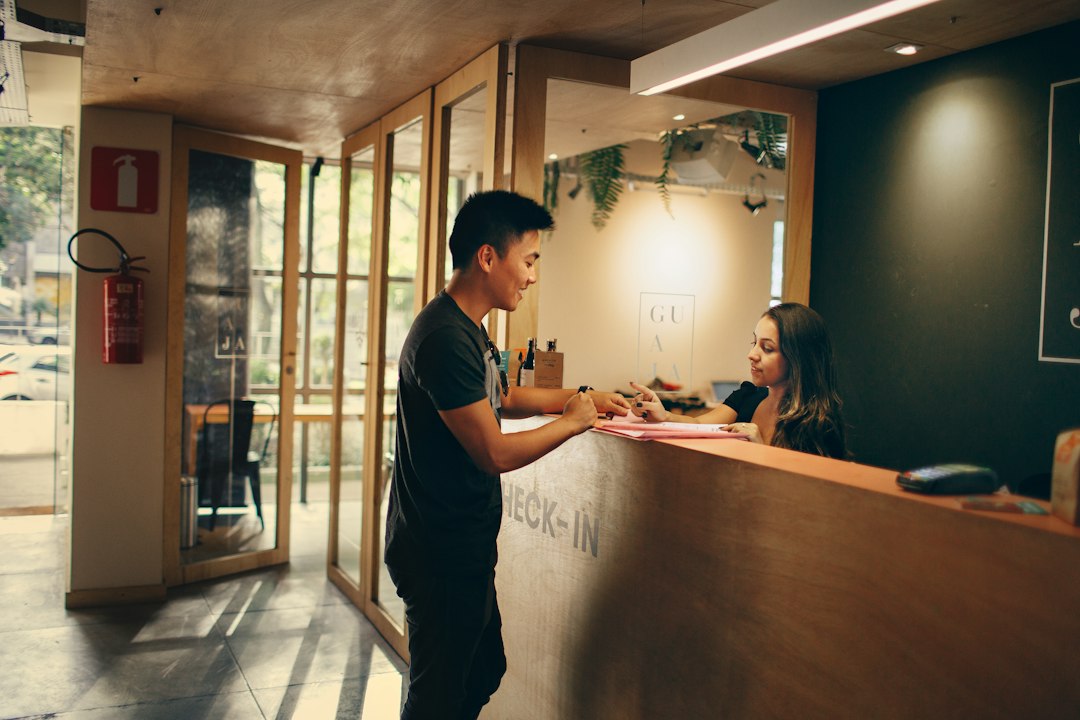
Beyond the spreadsheets and budget tracking, there is an intangible, emotional weight to the way you book a hotel online or in person. I travel because I love connecting with people. I crave the small, unscripted interactions that make a place memorable. When you solely book a hotel online or in person using self-check-in kiosks and digital room keys, you strip away a layer of humanity from your journey. Some of my most cherished travel memories began right at the reception desk. I remember checking into a tiny bed-and-breakfast in the Scottish Highlands. Because I had chosen to just walk in rather than book a hotel online or in person, I ended up spending an hour chatting with the owner, a man named Angus, who poured me a dram of local whisky and circled hidden hiking trails on a battered paper map. That kind of authentic welcome cannot be digitized.
You lose the opportunity for serendipity when every moment of your trip is micromanaged through an app. Asking for an upgrade, requesting a room with a specific view, or just getting a genuine recommendation for a late-night diner—these are the rewards of face-to-face interaction. The power of a polite smile and a respectful demeanor is vast. If you always book a hotel online or in person without speaking to a human, you become a ghost in the property. They don’t know you, and they don’t care about you. But when you stand before them, exhausted but polite, holding your passport and asking for their help, you tap into the universal human instinct of hospitality. It is the purest form of travel. Knowing exactly when to book a hotel online or in person means knowing when you need efficiency, and when you need connection.
Dealing with Last-Minute Changes
Travel is inherently unpredictable. Flights get delayed, trains derail, and sometimes you just fall in love with a city and decide to stay an extra week. How you handle these disruptions heavily depends on your initial decision to book a hotel online or in person. During a winter trip to Madrid, a massive snowstorm grounded all flights. My meticulously planned itinerary was instantly shredded. The chaos of last minute hotel booking descended upon the thousands of stranded passengers at Barajas airport. Everyone scrambled to book a hotel online or in person. The mobile networks crashed under the strain of thousands of panicked travelers refreshing their apps simultaneously. My screen was frozen on a loading wheel. It was a nightmare. The absolute vulnerability of relying on digital infrastructure to book a hotel online or in person became terrifyingly clear.
In a moment of clarity, I realized that the apps were useless. I grabbed my bag, pushed through the crowds, and jumped into one of the few available taxis. I told the driver to take me to a specific, slightly off-the-radar neighborhood I remembered from a previous trip. I walked into the first modest hotel I saw. The receptionist, completely unaware of the digital frenzy happening at the airport, calmly handed me a real, brass room key. Because I chose to bypass the crashed servers and physically book a hotel online or in person, I was sleeping in a warm bed while others were sleeping on the airport floor. Flexibility is the greatest weapon a traveler possesses. If you rigidly adhere to one method of how to book a hotel online or in person, you will eventually be caught out in the cold.
My Current Philosophy on Accommodations
After all these miles, all these stamped passports, and all these nights spent staring at unfamiliar ceilings, my philosophy has matured. The dogmatic debate of whether to book a hotel online or in person is, ultimately, a false binary. The smartest travelers use a hybrid approach. I still have a folder full of travel apps on my phone, and I still use them vigorously to scout locations and monitor pricing trends. But I no longer treat them as gospel. If I am heading to a high-density tourist trap during peak season, I absolutely book a hotel online or in person well in advance, locking in my safety net. The peace of mind is worth the potential lack of a human-negotiated discount.
However, if my itinerary allows for fluidity, if I am exploring rural areas, coastal villages, or off-season destinations, I deliberately leave gaps in my schedule. I give myself the freedom to arrive, assess the vibe of a neighborhood, walk into a lobby, and secure my room face-to-face. This dual strategy ensures I never miss out on the best of both worlds. I have stopped agonizing over the single ‘right’ way to book a hotel online or in person. I have accepted that travel is an imperfect art form. Sometimes you win, and you score an incredible penthouse for a fraction of the cost. Sometimes you lose, and you end up overpaying for a room that smells slightly of damp carpet. Both outcomes are part of the adventure.
Final Thoughts Before Your Next Adventure
As you prepare for your next journey, staring at your luggage and dreaming of the sights you will see, don’t let the logistics overshadow the joy of the trip. The anxiety of trying to perfectly book a hotel online or in person is natural, but it shouldn’t paralyze you. Remember that the bed you sleep in is just a temporary shelter; the real magic happens out in the streets, in the museums, and at the local cafes. My experiences have taught me that whether you book a hotel online or in person, the most important thing is that you actually go. You take the leap, you board the plane, and you embrace the beautiful chaos of navigating the globe. I have shared my triumphs and my failures with you, hoping to demystify the process.
So, the next time you find yourself staring at a glowing screen at 2 AM, paralyzed by choice, take a deep breath. Evaluate the context of your trip. Are you prioritizing the absolute lowest price, absolute certainty, or the chance for a spontaneous connection? Your priorities will dictate whether you should book a hotel online or in person in that specific moment. Trust your instincts. If the app feels wrong, walk away. If the front desk quote is absurd, pull out your phone. You have the tools, the knowledge, and the freedom to craft your perfect vacation exactly how you see fit. Embrace the journey, respect the people you meet along the way, and never forget that sometimes, the best experiences happen when you throw the plan out the window and just go with the flow.
I would absolutely love to hear about your personal experiences with this. Have you had a nightmare scenario when trying to book a hotel online or in person? Or perhaps a glorious victory at a walk-in front desk? Share your stories below, because every traveler’s perspective adds a new layer of understanding to this incredible, shared journey we are all on.
Trending & Related Topics
front desk negotiation
travel anxiety relief
finding cheap lodging
loyalty program perks
authentic travel experiences
backpacking tips
luxury room upgrades
spontaneous travel
budget trip planning
digital nomad stays
vacation accommodation tricks