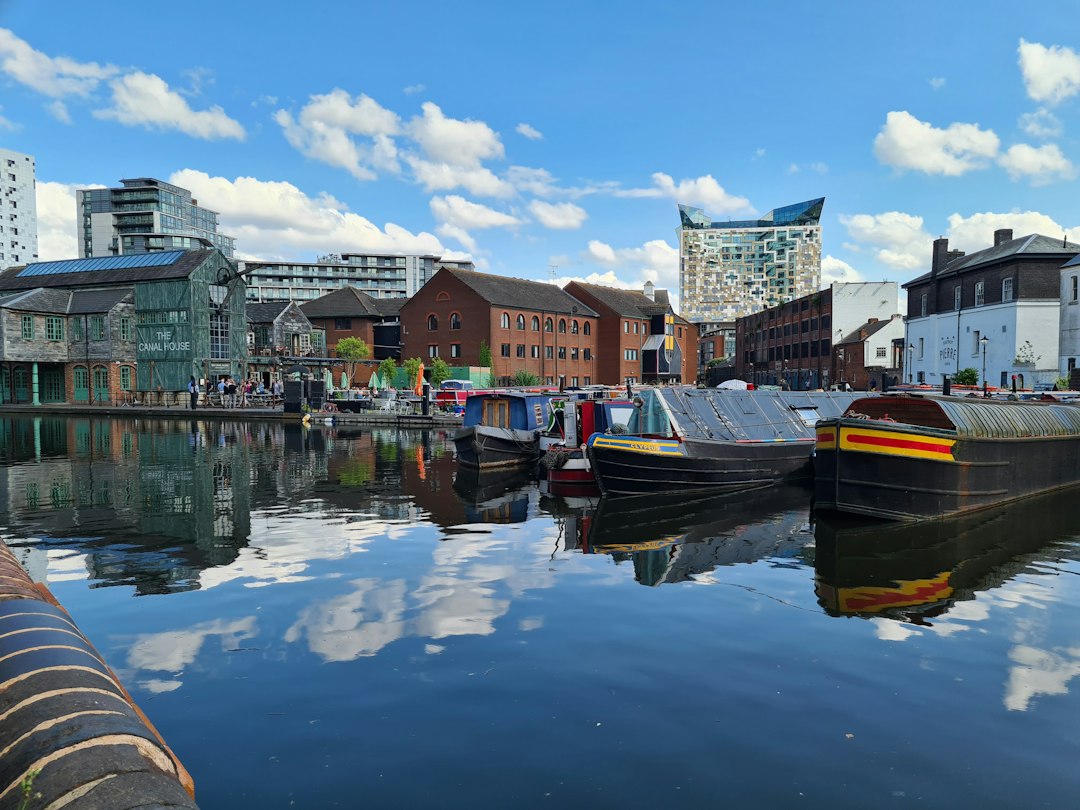
Birmingham deserves more than being treated as a station between London and the north. A first city break can combine industrial heritage, canals, museums, food, architecture and neighborhoods that feel very different from one another.
This Birmingham bucket list is organized around experiences that fit naturally into a two- or three-day visit.
12 worthwhile things to do in Birmingham
1. Explore the Jewellery Quarter
The Jewellery Quarter combines working craftspeople, historic industrial buildings, independent businesses and museums. Visit Birmingham describes it as a conservation area with more than 200 listed buildings and a major centre of British jewellery production.
Use the official Jewellery Quarter guide to check current attractions and events.
2. Walk the canals around Brindleyplace
Birmingham’s waterways are best used as a walking route rather than a statistic to compare with another city. Brindleyplace and the canal network provide an easy transition between the city centre, cultural venues and waterside restaurants.
3. Visit Birmingham Museum and Art Gallery
BMAG first opened in 1885 and remains one of the city’s key cultural institutions. Exhibition areas and opening arrangements can change, so check the official tourism listing before planning a museum-heavy day.
4. See the Library of Birmingham and Centenary Square
The modern library is a useful architectural stop and places you close to Symphony Hall, the Rep and the western side of the city centre.
5. Spend time in Digbeth
Digbeth offers a more creative and post-industrial side of Birmingham, with converted buildings, independent venues and street art. It pairs well with a city-centre day because it is relatively close rather than a separate excursion.
6. Visit Birmingham Back to Backs
The preserved courtyard houses tell a more intimate story of urban working life than grand civic architecture does. Check current ticket availability and opening arrangements in advance.
7. Walk Victoria Square and the civic centre
This is useful for understanding Birmingham’s monumental Victorian and civic architecture and can be combined with the museum, library and central shopping streets.
8. Try Birmingham’s South Asian food heritage
Birmingham is strongly associated with the balti and a broader South Asian food culture. Do not reduce the city to one dish: compare neighborhoods and independent restaurants rather than eating only in central chains.
9. Visit Thinktank with children or science fans
Visit Birmingham highlights Thinktank as a major city-centre science museum and family attraction. It can be a strong rainy-day option.
10. Consider Cadbury World for a family day
Cadbury World is one of the best-known family attractions in the wider Birmingham area. It requires more dedicated time than a quick city-centre stop, so build the day around it rather than squeezing it between central sights.
11. See a performance
Birmingham has a strong live-music and theatre scene. Check the event calendar before the trip because a concert, theatre performance or sports event can become the anchor for an evening.
12. Add the Black Country Living Museum if you have extra time
The Black Country Living Museum is outside the core city-centre itinerary but is particularly useful for understanding the industrial history of the wider West Midlands.
How many days do you need?
| Time | Good plan |
|---|---|
| 1 day | City centre, canals, library and one museum/neighborhood |
| 2 days | Add Jewellery Quarter, Digbeth and an evening experience |
| 3 days | Add a larger family attraction or Black Country day |
A simple 2-day structure
Day 1: Victoria Square, BMAG, Library of Birmingham, canals and Brindleyplace. Day 2: Jewellery Quarter in the morning, then Digbeth and food-focused exploration in the afternoon/evening.
Visit Birmingham published a current 48-hour itinerary in September 2026 and highlights the same mix of culture, canals, neighborhoods and food. Use the official Birmingham tourism site for current opening information and events.
Who will enjoy Birmingham?
The city is especially strong for travelers interested in industrial history, architecture, food, music, urban regeneration and family museums. It is less about one postcard landmark and more about how different districts fit together.
To turn these Birmingham ideas into a manageable trip, use our Travel Planning Guide and Travel Bucket List framework.
Getting around Birmingham without a car
For a short city break, a car is usually unnecessary. Visit Birmingham’s official transport guidance highlights buses, trams and trains as the main ways to move around the city. The centre, Brindleyplace, Jewellery Quarter and parts of Digbeth can also be combined on foot if you group the day sensibly.
Use the official Getting Around Birmingham guide for current public-transport information rather than relying on an old route map.
Where to stay for a first visit
- City centre: easiest for a short first trip and evening restaurants.
- Jewellery Quarter: good for independent character and a quieter evening base.
- Brindleyplace / Westside: useful for canals, Symphony Hall and nightlife.
- Digbeth: best if the creative scene matters more than classic sightseeing convenience.
For two nights, being able to walk or take one short tram/train journey to most places is usually worth more than saving a small amount on a room far outside the centre.
Before you book tickets
Check museum opening days and event calendars first. A concert, football match, exhibition or large NEC event can affect hotel prices and transport demand even if it is not part of your own itinerary.
For hotel comparison, use our How to Find Cheap Hotels guide and Travel Booking Toolkit.
Last reviewed: October 2026.