Recommended for you
My Month-Long Quest to Find the Best Beaches in the Canary Islands
I still remember the precise moment I decided I needed to pack my bags and go searching for the best beaches in the Canary Islands. I was sitting in my cramped apartment, staring at the relentless gray drizzle hitting my window. I had recently finished writing my Spain Travel Bucket List: My Personal Journey & Route, and while mainland Spain had captured my heart with its vibrant cities and historic streets, my soul was craving the ocean. Not just any ocean, but the wild, unpredictable, and fiercely beautiful Atlantic. I wanted warm sand, dramatic cliffs, and saltwater that could wash away months of urban fatigue. I wanted to find the best beaches in the Canary Islands, a volcanic archipelago situated off the northwestern coast of Africa that promises eternal spring and some of the most striking landscapes on the planet.
When I started planning this trip, I realized that defining the best beaches in the Canary Islands is highly subjective. Are you looking for powdery white sand imported from the Sahara, or do you prefer the mystical allure of glittering black volcanic ash? Do you want calm, glass-like lagoons perfect for floating, or towering waves that attract the bravest surfers in Europe? I knew that to truly understand and document the best beaches in the Canary Islands, I couldn’t just stay in one place. I had to island-hop. I had to drive down unpaved, terrifying cliffside roads. I had to get sand in my camera gear and salt in my hair. I had to experience the best beaches in the Canary Islands firsthand, without relying on glossy brochures or heavily edited social media posts.
Packing for this expedition required some serious thought. I leaned heavily on my own past advice from my Ultimate Guide: Packing for a Beach Vacation, ensuring I had enough sunscreen, windbreakers for the gusty islands, and sturdy shoes for the rocky coastal hikes. I wanted to be prepared for every microclimate because the best beaches in the Canary Islands exist in a staggering variety of environments. With my backpack zipped and my flight booked, I boarded a plane bound for Las Palmas, ready to embark on a four-week adventure dedicated entirely to uncovering the absolute best beaches in the Canary Islands.
Gran Canaria: Where My Search for the Best Beaches in the Canary Islands Began
Stepping off the plane in Gran Canaria, I was immediately hit by a wall of warm, dry air. It smelled like salt and blooming bougainvillea. Gran Canaria is often called a miniature continent because of its diverse landscapes, making it the perfect starting point to hunt for the best beaches in the Canary Islands. I picked up my rental car, rolled down the windows, and drove south towards the coast. I had always heard that if you want to see the best beaches in the Canary Islands, you must start with the iconic southern coast of this island.
Maspalomas: A Desert Meeting the Ocean
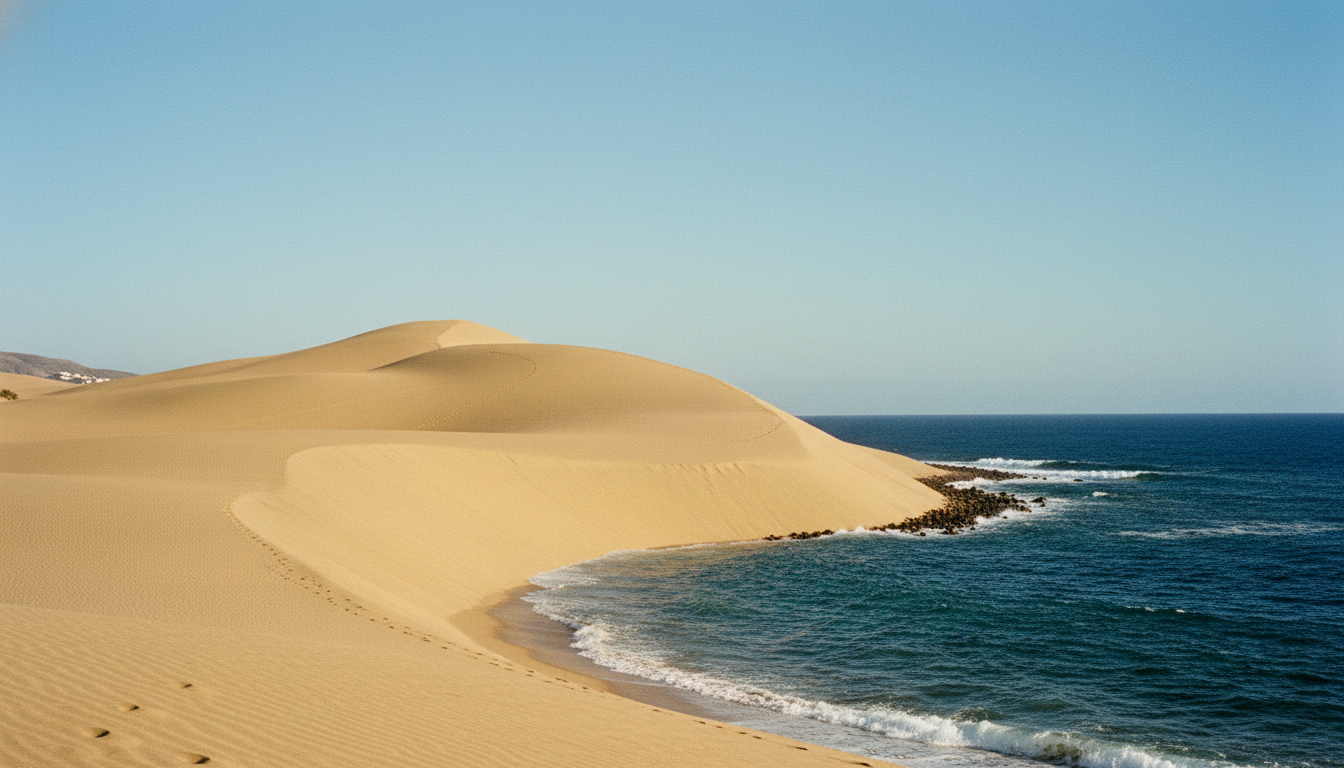
My first stop in my pursuit of the best beaches in the Canary Islands was Playa de Maspalomas. Nothing could have prepared me for the sheer scale of it. Maspalomas is not just a strip of sand; it is a massive, protected natural reserve of rolling sand dunes that look like a piece of the Sahara Desert dropped right against the deep blue Atlantic. Walking into the dunes, I felt completely transported. This is a crucial element of what makes the best beaches in the Canary Islands so special: the overwhelming sense of nature’s power.
I took off my shoes and let the fine, sun-baked sand squeeze between my toes. The trek from the edge of the town to the water’s edge took much longer than I anticipated because the dunes are so vast. But this vastness is exactly why Maspalomas ranks so high among the best beaches in the Canary Islands. Despite being one of the most famous tourist destinations in Europe, you can always find a secluded spot if you are willing to walk far enough. I spent the entire afternoon just sitting on the crest of a massive dune, watching the waves crash and realizing that my journey to find the best beaches in the Canary Islands was off to an incredible start.
Playa del Inglés: The Lively Side of the Coast
Just east of the dunes lies Playa del Inglés. When discussing the best beaches in the Canary Islands, one must acknowledge that not everyone wants absolute isolation. Sometimes, you want a vibrant atmosphere, cold drinks nearby, and the energy of hundreds of people enjoying the sun. Playa del Inglés delivers exactly that. It is a wide, golden stretch of coastline backed by a bustling promenade.
I spent a day here renting a sunbed, reading a paperback, and occasionally retreating to a nearby beach bar for a plate of wrinkled potatoes (papas arrugadas) with spicy mojo sauce. It felt like the quintessential holiday experience. To me, the best beaches in the Canary Islands are those that offer a distinct mood, and Playa del Inglés offered a mood of pure, unadulterated vacation joy. I even looked into staying longer and consulted my notes on the Best Beachfront Hotels in Grand Canary to see if I could snag a last-minute room with an ocean view. It was here, watching the sunset with a cold local beer in my hand, that I felt I was truly starting to grasp the diverse nature of the best beaches in the Canary Islands.
Fuerteventura: The Wildest and Best Beaches in the Canary Islands
After a week in Gran Canaria, I took a ferry across the shimmering strait to Fuerteventura. If Gran Canaria is a miniature continent, Fuerteventura is a barren, wind-swept frontier. It is the oldest island in the archipelago, its volcanoes long dormant and eroded by millions of years of wind. I had been told by numerous locals that if I was serious about finding the best beaches in the Canary Islands, Fuerteventura would absolutely blow my mind. They were right.
The Treacherous Road to Cofete
I will never forget the day I drove to Playa de Cofete. Of all the best beaches in the Canary Islands, this one requires the most commitment. Located on the remote Jandia peninsula, Cofete is only accessible via a rugged, terrifying dirt track that winds over a high mountain pass. I gripped the steering wheel of my small rental car until my knuckles turned white, praying the tires would hold. But as I crested the mountain and looked down at the coastline, every ounce of fear vanished. There, laid out before me, was arguably the most dramatic of all the best beaches in the Canary Islands.
Cofete is an endless expanse of wild, untamed sand backed by the towering, dark Jandia mountains. The Atlantic swells here are massive, crashing onto the shore with a deafening roar. A permanent mist of saltwater spray hangs in the air, creating a mystical, moody atmosphere. It is not a place for swimming; the currents are far too dangerous. Instead, it is a place for awe. Walking along the shoreline, completely alone for miles, I felt incredibly small. When I think back on my quest to discover the best beaches in the Canary Islands, Cofete stands out as the most emotionally powerful landscape I have ever witnessed.
Sotavento: The Windsurfer’s Dream
Contrasting the aggressive wildness of Cofete is Playa de Sotavento, located on the southeastern coast of Fuerteventura. When windsurfers talk about the best beaches in the Canary Islands, Sotavento is always the first name mentioned. I arrived during low tide, and the landscape was alien and beautiful. The receding ocean leaves behind massive, shallow tidal lagoons of crystal-clear water, separated by long sandbars.
I spent hours walking through the ankle-deep, sun-warmed water of the lagoons, watching colorful kite surfers leap into the air against the steady trade winds. The sheer size of Sotavento is baffling; you can walk for hours and the scenery barely changes, yet it never gets boring. It is a dynamic, ever-changing environment. This is a recurring theme when you explore the best beaches in the Canary Islands: the tides and the wind completely transform the locations from hour to hour. Sotavento firmly cemented its place on my personal list of the best beaches in the Canary Islands because of this incredible tidal phenomenon.
Lanzarote: Volcanic Ash and Emerald Waters
My ferry ride from Fuerteventura to Lanzarote was short, but it felt like traveling to another planet. Lanzarote is defined by its recent volcanic history; much of the island is covered in black, twisted lava fields from eruptions that occurred in the 1700s. I was incredibly curious to see how this brutal geology would interact with the ocean. Would the best beaches in the Canary Islands look completely different here? The answer was a resounding yes.
Playa de Papagayo: The Sheltered Cove
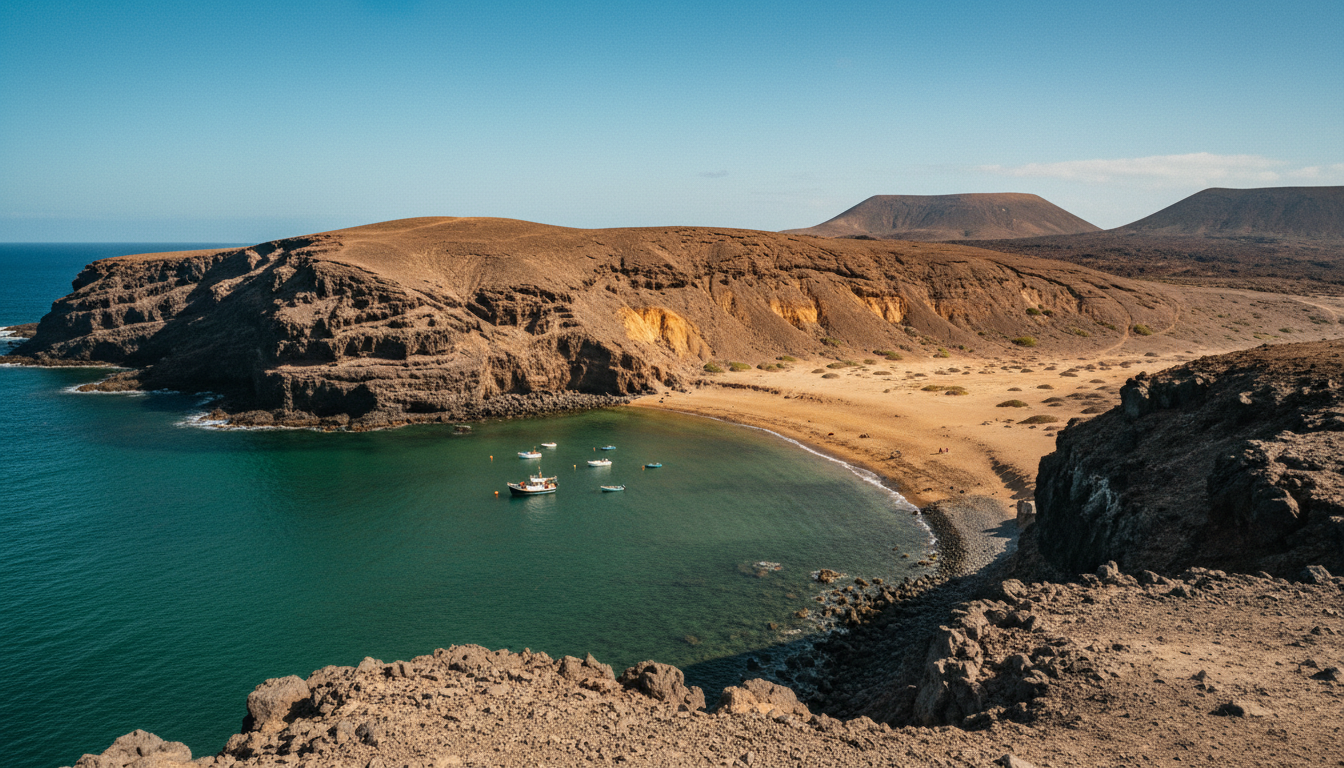
Tucked away at the southern tip of the island, within a protected natural park, lies Playa de Papagayo. Finding the best beaches in the Canary Islands often involves a bit of off-roading, and Papagayo was no exception. After paying a small entrance fee, I navigated another bumpy dirt road until I reached a parking area situated atop high, barren cliffs. I walked to the edge, looked down, and literally gasped.
Below me was a perfect crescent of golden sand, embraced by dark volcanic rock formations that sheltered the cove from the relentless trade winds. The water here was unlike anywhere else I had seen; it was a vivid, luminous emerald green, so clear that I could see fish darting around from fifty feet above. I hiked down the steep dirt path and plunged into the water. It was calm, cool, and perfectly still. I spent the entire afternoon snorkeling and floating on my back, looking up at the stark cliffs. Without a doubt, Papagayo is a crown jewel among the best beaches in the Canary Islands. It is an oasis of calm amidst a rugged, hostile landscape.
Famara: The Majestic Surfer’s Coast
If Papagayo is calm, Playa de Famara on the northwest coast of Lanzarote is beautifully chaotic. Many travelers I met along the way insisted that Famara belonged at the top of any list of the best beaches in the Canary Islands, and I had to see why. The drive down to Famara reveals a massive, sweeping bay backed by the staggering Risco de Famara cliffs, which rise almost vertically from the sea, their peaks often shrouded in fast-moving clouds.
The sand at Famara is a mix of gold and volcanic brown, packed hard near the water’s edge. I loved taking off my shoes and walking the entire length of the bay, watching the surfers paddle out into the consistent, rolling breaks. The energy here is palpable. It feels raw and invigorating. The reflection of the massive cliffs in the wet sand at low tide creates a mirror effect that makes you feel like you are walking in the sky. For anyone seeking dramatic photography and a deep connection with the elements, Famara is undeniably one of the best beaches in the Canary Islands.
La Graciosa: The Untouched Paradise
Just off the northern tip of Lanzarote is a tiny island called La Graciosa. There are no paved roads here, only sandy tracks. It is a place where time seems to have stopped completely. I rented a slightly rusty mountain bike near the small harbor and set off to find what many locals consider the ultimate hidden gem among the best beaches in the Canary Islands: Playa de las Conchas.
The bike ride was grueling in the midday heat, pedaling through deep sand and over rocky outcrops, but the isolation was thrilling. When I finally arrived at Playa de las Conchas, I dropped my bike and stared. A pristine stretch of pale golden sand met water so deeply turquoise it looked artificial. In the distance, an uninhabited volcanic rock rose sharply from the sea. I was the only person there. I sat on the sand for hours, listening to the crushing silence broken only by the waves. This absolute solitude is a rare commodity, and it is why Playa de las Conchas is, to me, the most emotionally resonant of all the best beaches in the Canary Islands.
Tenerife: Black Sand and Majestic Pines
Next, I flew to Tenerife, the largest and most populous of the islands. Dominated by the towering peak of Mount Teide, Spain’s highest mountain, Tenerife is a place of extreme contrasts. While the south is famous for massive resort complexes, I knew that the true best beaches in the Canary Islands were hidden in the rugged north. My experiences here perfectly mirrored the feelings I wrote about in my piece, Hidden Beaches in Tenerife: My Personal Escape.
Playa de Benijo: The Prehistoric Coast
I drove deep into the Anaga Rural Park, a dense, ancient laurel forest that feels prehistoric. The road twists and turns dramatically before finally plunging down towards the northern coastline. My destination was Playa de Benijo, widely considered one of the best beaches in the Canary Islands for its striking black sand and dramatic sea stacks.
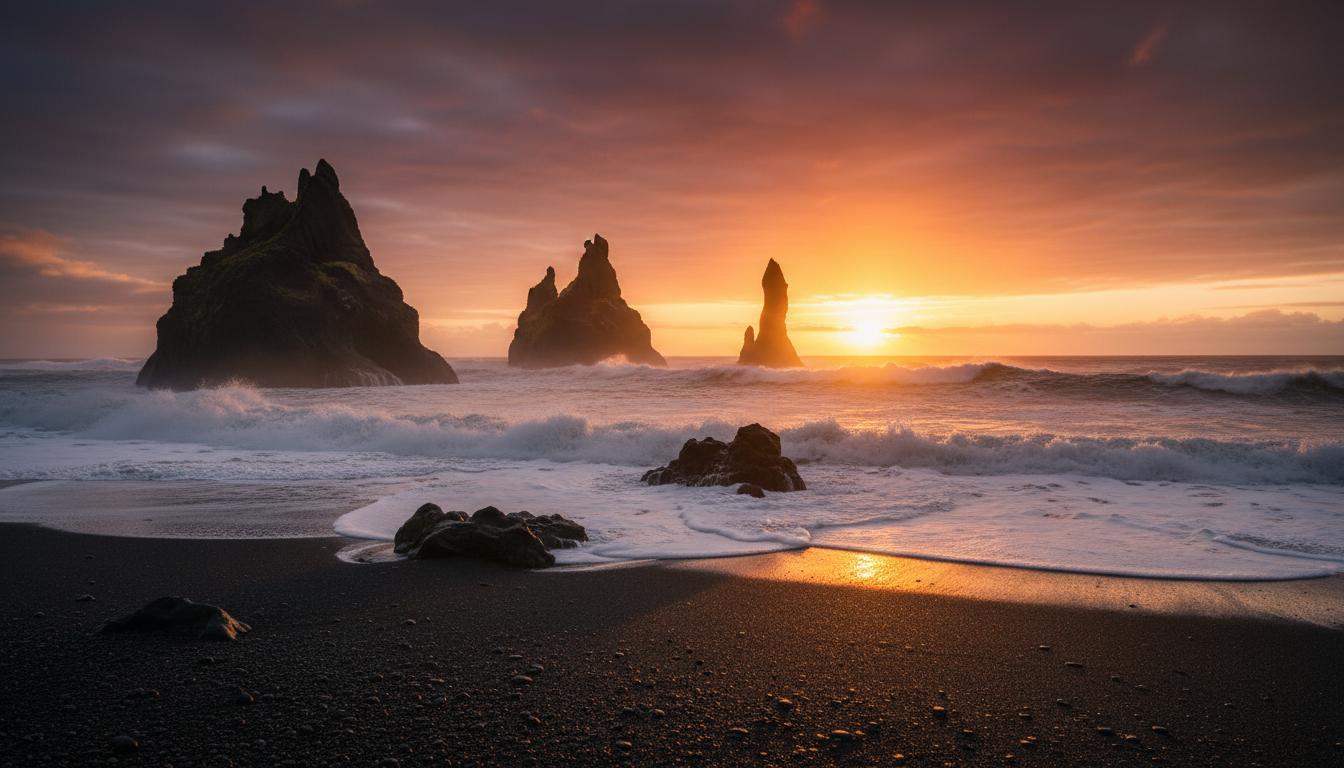
Walking down the steep wooden stairs to the beach, the contrast of the pitch-black sand against the white sea foam was mesmerizing. The sand here isn’t just dark; it sparkles under the sun like crushed diamonds, a direct result of the island’s volcanic heritage. I visited at low tide near sunset, and the light reflecting off the wet black sand and the jagged rocks jutting out of the ocean created a scene of unimaginable beauty. Benijo isn’t a place for a casual swim, as the currents are fierce, but as a visual spectacle, it absolutely dominates the list of the best beaches in the Canary Islands.
Las Teresitas: The Golden Illusion
I wanted to experience a completely different vibe on Tenerife, so I visited Playa de las Teresitas, located just north of the capital city, Santa Cruz. This beach is fascinating because it is completely artificial. In the 1970s, realizing they needed a safe, family-friendly beach near the city, the local government imported millions of tons of golden sand from the Sahara Desert and built a massive breakwater to calm the ocean. Despite being man-made, it functions perfectly as one of the best beaches in the Canary Islands.
The result is a mile-long stretch of perfect, soft golden sand lined with palm trees, with water as calm and clear as a swimming pool. I spent a very relaxing Sunday here, watching local families set up massive picnics, playing cards, and enjoying the sun. It was a stark contrast to the wildness of Benijo or Cofete, but it proved to me that the best beaches in the Canary Islands can be tailored to suit every possible desire and need.
El Hierro: Defining the Best Beaches in the Canary Islands
My final stop was the tiny, remote island of El Hierro. It is the westernmost island, sitting on the very edge of Europe. I wanted to push the boundaries of my quest to find the best beaches in the Canary Islands. El Hierro is famous for its steep cliffs and lack of traditional sandy shores. But does a beach need sand to be great? I didn’t think so. I sought out Charco Azul, a series of natural volcanic swimming pools carved into the rocky coastline by ancient lava flows.
Climbing down into these dark, smooth rock formations and swimming in the trapped seawater, which is naturally replenished by crashing Atlantic waves, was exhilarating. It felt incredibly primal. Floating on my back in a pool of crystal-clear ocean water, surrounded by towering volcanic arches, I realized that the definition of the best beaches in the Canary Islands is constantly shifting. Sometimes, the best beach isn’t a beach at all; it’s a profound, intimate interaction with the ocean, facilitated by the island’s unique geology. Charco Azul gave me that connection, proving that the best beaches in the Canary Islands come in forms you might never expect.
Final Thoughts on the Best Beaches in the Canary Islands
As I sat at the airport in El Hierro, waiting for my puddle-jumper flight back to the mainland, I reflected on the last four weeks. I had set out to find the best beaches in the Canary Islands, and in doing so, I had driven over a thousand miles, taken numerous ferries, gotten violently sunburned, and ruined a pair of shoes. But I had also seen landscapes so beautiful they brought tears to my eyes. I had learned that the best beaches in the Canary Islands are not a monolith. They are a diverse collection of ecosystems, from the rolling dunes of Maspalomas to the emerald coves of Papagayo, from the wild, terrifying expanse of Cofete to the sparkling black sands of Benijo.
If you are planning a trip, I urge you not to just stay by your hotel pool. Rent a car, take a ferry, and go exploring. The best beaches in the Canary Islands are out there, waiting at the end of dirt roads, at the bottom of steep cliffs, and across windy straits. Every island offers a different piece of the puzzle, and to truly experience the best beaches in the Canary Islands, you have to be willing to get a little lost. I know that I will be returning, because no matter how many you see, the best beaches in the Canary Islands always leave you craving just one more sunset over the Atlantic.