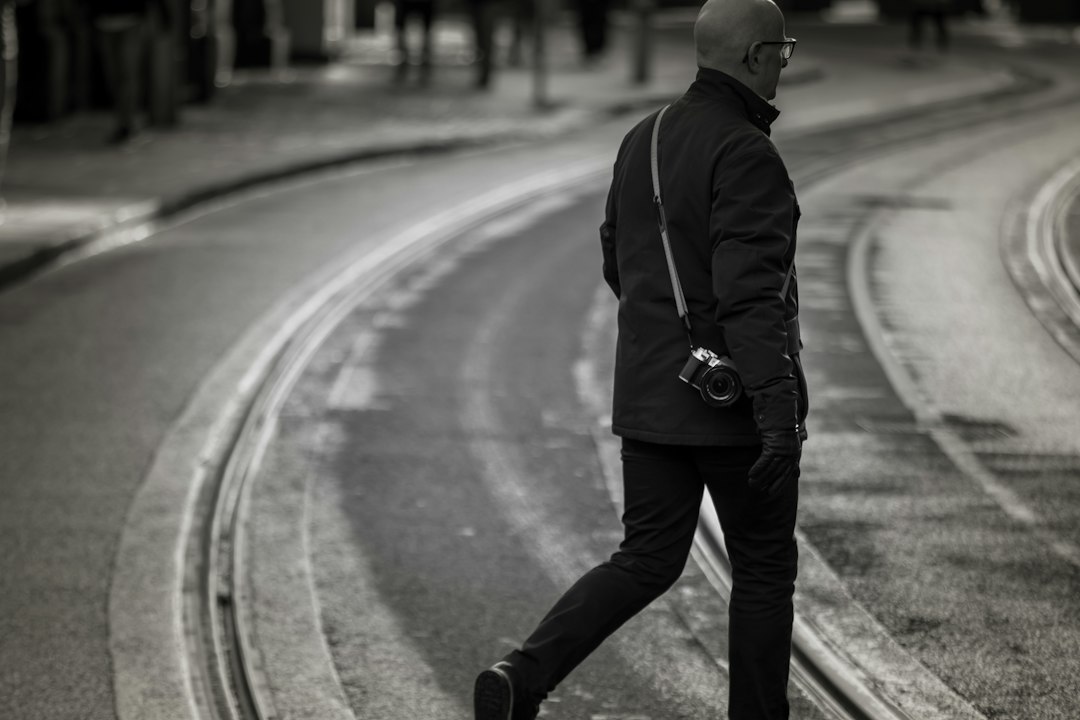
Better travel photos usually come from timing, composition and attention rather than carrying more equipment. A phone or simple camera can produce strong results if you know what to look for and build a repeatable routine.
Start with light, not landmarks
Early morning and late afternoon often give softer light and fewer harsh shadows. Midday can still work well for markets, interiors or graphic architecture, but it is rarely the easiest time for flattering outdoor portraits.
If a landmark faces the wrong direction in the morning, return later instead of assuming the camera is the problem.
Use a simple composition checklist
- Is the horizon level?
- Is there distracting clutter at the edges?
- Can you move closer instead of zooming?
- Is the subject clearly separated from the background?
- Would a lower or higher viewpoint improve the scene?
Phone vs camera: what matters most
| Situation | Phone is often enough | Camera advantage |
|---|---|---|
| City streets | Fast and discreet | More lens choices |
| Landscapes | Excellent in good light | More dynamic range and detail |
| Wildlife | Limited reach | Telephoto lenses matter |
| Night scenes | Good with computational modes | More control with tripod and larger sensor |
Take three versions of an important scene
For a place you care about, take:
- a wide establishing image;
- a medium image that explains the subject;
- a detail that records texture, food, signage or architecture.
This creates a more complete travel story than collecting only wide landmark photographs.
Do not photograph every landmark the same way
After taking the obvious wide shot, look for a second image: a detail, reflection, doorway, person for scale or a view that shows how the place fits into its surroundings.
Use people for scale
A person in a landscape can make cliffs, temples, beaches or mountains feel larger and more understandable. They do not need to be posing or looking at the camera.
Photograph transitions
Stations, ferries, café tables, hotel windows and road stops often tell more of the travel story than a sequence of famous monuments.
These transition images are also useful when you later build a photo book or travel journal because they connect major locations visually.
For portraits, simplify the background
Move a few steps to remove signs, bins, parked cars or other distractions. A cleaner background can improve a portrait more than changing camera settings.
Before taking the photo, look behind the person’s head and at all four corners of the frame.
At night, stabilize first
Before increasing digital zoom or applying aggressive editing, hold the phone against a wall, railing or stable surface. Many night photos fail because of movement rather than lack of equipment.
Do not overuse digital zoom
On phones, heavy digital zoom often reduces detail. When it is safe and practical, move closer or use the device’s optical camera/lens options instead.
Clean the lens
It sounds trivial, but phone lenses collect fingerprints constantly. A quick wipe before a sunset or night scene can remove haze and flare that editing will not fully fix.
Back up during the trip
Enable cloud backup when practical or copy important photos to another device. A camera full of good images has little value if the card is lost or corrupted.
For longer trips, use the basic 3-2-1 idea where practical: more than one copy, on more than one device or medium, with at least one copy separate from the camera.
Organize by day or place
Create simple folders/albums such as “Paris Day 1” or “Kyoto – Arashiyama.” This saves far more time later than trying to remember where hundreds of unlabeled photos were taken.
Edit lightly
Adjust exposure, crop and white balance before applying heavy filters. Overprocessing can make skies, skin and architecture look less believable.
Use one consistent editing approach across a group of photos rather than giving every image a different look.
Delete duplicates selectively
Do not spend the trip obsessively editing. At the end of the day, remove accidental screenshots, obvious blur and near-identical duplicates. Leave final selection for later.
Respect people and places
Photography rules vary in museums, religious sites and private spaces. Ask before taking close portraits of strangers, and follow local restrictions on flash, tripods or drones.
A practical daily photo routine
- Take one establishing image of the place.
- Capture one detail.
- Include one people or scale image when appropriate.
- Record one food, transport or everyday-life scene.
- Back up important images when you have reliable Wi-Fi.
- Delete only obvious failures and duplicates.
Build a story, not just a gallery
A good travel set should explain where you were, what the place felt like and what happened between the famous sights. That is why food, streets, transport and small human moments matter as much as landmarks.
Continue documenting the trip
Pair your photos with context using our Travel Journaling Guide. For carrying less equipment, see Packing Light Guide, and for overall trip structure use the Travel Planning Guide.
Last reviewed: September 2026.