
A travel journal does not need to become a second job. The most useful journal is one you can maintain during the trip and still enjoy reading years later. Ten honest lines written while the memory is fresh are usually more valuable than pages reconstructed months later.
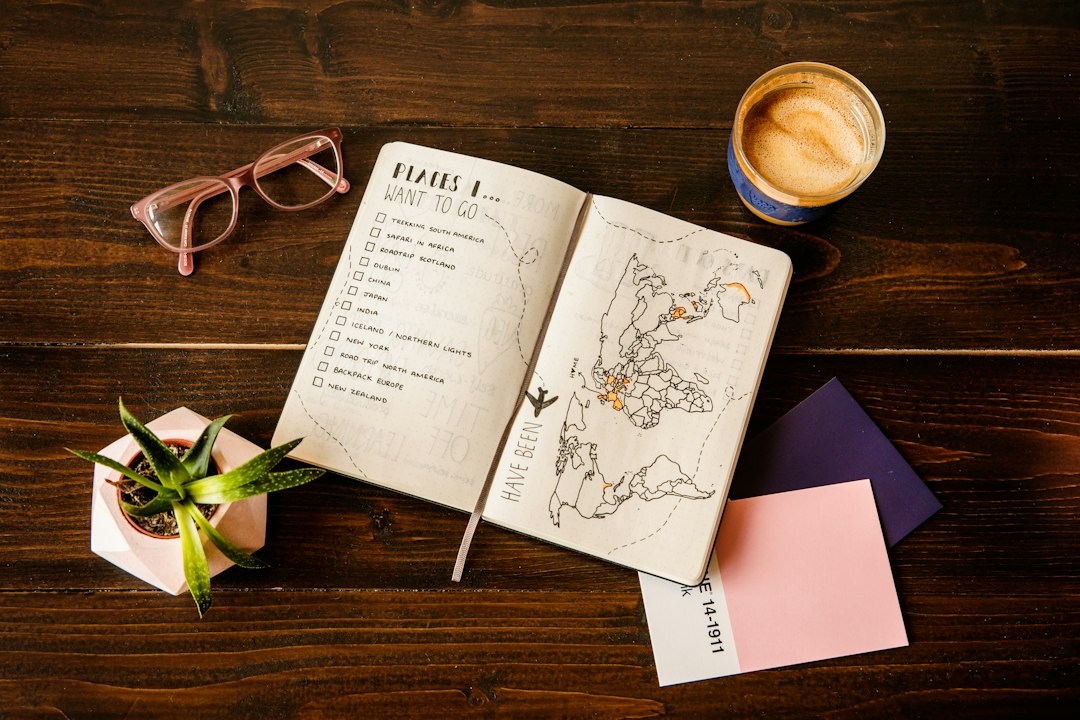
A simple journal is often easier to maintain than an elaborate system. Photo: That’s Her Business / Unsplash.
Choose a format you will actually use
| Format | Best for | Trade-off |
|---|---|---|
| Small notebook | Quick observations, tickets and sketches | Harder to search later |
| Phone notes | Fast entries and searchable text | Easy to forget among other apps |
| Photo journal | Visual travelers | Needs captions to preserve context |
| Daily digital document | Longer reflections | Can feel like work if entries are too long |
| Voice notes | Busy or tiring days | Needs organizing later |
You can also combine formats. A notebook for quick notes plus a phone album with captions is often more realistic than forcing yourself to maintain one perfect system.
Set up the journal before departure
Create one simple page or note with the trip dates, route, accommodation names and a blank section for each day. This removes the friction of deciding where to write when you are tired.
Add only the practical information you may want later: booking references, restaurant names, memorable prices and transport notes. Do not copy your entire itinerary into the journal.
Use a five-line daily template
- Where did I go?
- What surprised me?
- What did I eat, hear or notice?
- What would I do differently?
- What moment do I want to remember?
This takes only a few minutes and preserves enough context to reconstruct the day years later.
Record details photos cannot capture
Photos show what a place looked like, but they rarely preserve sound, smell, temperature, conversations, small mistakes or how you felt at a particular moment. Those details are what make a journal personal.
Instead of writing “visited the market,” note the vendor who explained an unfamiliar fruit, the music playing nearby or the fact that rain suddenly emptied the street.
Do not write only the highlights
A missed train, strange meal or rainy afternoon can become more memorable than a famous landmark. A journal becomes more authentic when it records the trip that actually happened rather than a polished version designed for social media.
Add practical information selectively
Save hotel names, restaurant names, route notes or useful local tips when you think you may return or recommend them to someone. A short note such as “great location, noisy room facing street” is more useful later than copying the hotel description.
Pair entries with a few photographs
Choose one to three images per day and add a short caption explaining why they matter. This makes a digital journal much easier to revisit than a folder of hundreds of unlabeled photos.
Photograph signs, menus, train boards or street names when they help identify a place later. You can delete the purely practical photos after transferring the information to the journal.
Use voice notes when you are tired
A 30-second voice memo can capture a memory when you do not feel like writing. Record it while walking back to the hotel or waiting for transport, then summarize it later if you want a cleaner final journal.
Keep a running “small moments” list
Not every memory needs a paragraph. Record small observations: a phrase you heard, a view from a train, a favorite pastry, a street musician, a helpful stranger or a funny translation.
This list often becomes the most personal section because it contains things you would never search for in a guidebook.
Use one question to deepen an entry
When a day deserves more than five lines, choose one question:
- What felt different from what I expected?
- What did I learn about the place?
- What did I learn about the way I travel?
- What would I recommend to a friend?
- What would I skip next time?
One specific answer is better than trying to summarize an entire city.
What to avoid
- forcing yourself to write several pages every night;
- recording only logistics;
- waiting until the end of the trip to remember everything;
- turning the journal into a social-media performance;
- saving photos without any context;
- abandoning the journal because you missed one or two days.
If you fall behind
Do not try to recreate every hour. Write three bullets for the missing day: where you went, the strongest memory and one practical detail. Then continue with the current day. Keeping the habit alive matters more than filling every gap.
A simple end-of-trip summary
Before returning home, write one page with your favorite place, best meal, biggest surprise, most useful lesson, one disappointment and where you would go back. That summary often becomes the easiest part to reread later.
Organize the journal when you get home
Within a week, back up digital notes and photos, add missing place names and move tickets or receipts you want to keep into one folder. Do not turn this into another large project; the goal is simply to make the memories easy to find later.
Combine journaling with better travel photos
For visual memories, see our Travel Photography Tips. For planning the trip itself, use the Travel Planning Guide and our Packing Light Guide.
Last reviewed: September 2026.