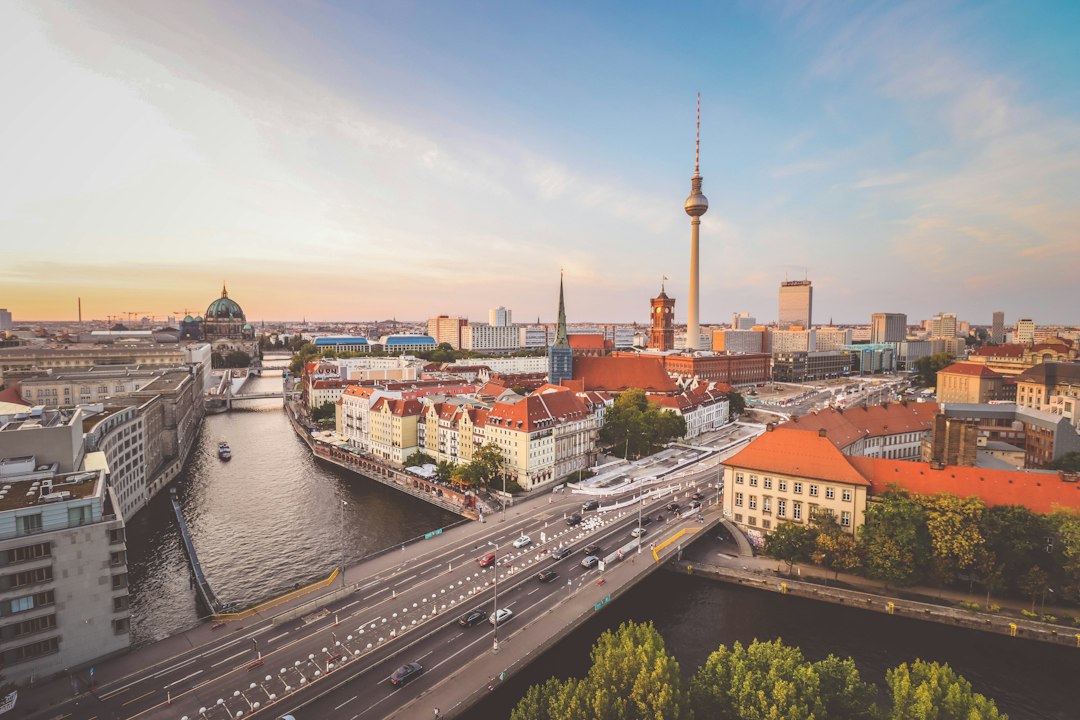
Berlin does not have one single centre that explains the whole city. Its history and daily life are spread across distinct boroughs and smaller neighborhoods, or Kieze. A first trip becomes much easier when you group sightseeing by area instead of crossing the city repeatedly.
Berlin’s official tourism organization highlights twelve boroughs, each with its own character, from historic Mitte and creative Friedrichshain-Kreuzberg to the greener outer districts.
See the official visitBerlin neighborhood guide.
Berlin neighborhoods at a glance
| Area | Best for | Trade-off |
|---|---|---|
| Mitte | First-time landmarks, museums, history | More visitor-heavy and often pricier |
| Kreuzberg | Food, nightlife, canals, alternative culture | Can be lively/noisy |
| Friedrichshain | Nightlife, East Berlin history, East Side Gallery | Less convenient for some western sights |
| Prenzlauer Berg | Cafés, residential streets, calmer evenings | Fewer major landmarks on the doorstep |
| Charlottenburg | West Berlin, shopping, classical city feel | Farther from some eastern districts |
| Neukölln | Local food, bars, neighborhood life | Less landmark-focused |
| Treptow-Köpenick | Lakes, greenery, slower Berlin | Too far out for a short first visit |
Mitte: easiest for a first sightseeing day
Mitte contains many of the landmarks first-time visitors expect: Brandenburg Gate, Museum Island, the Reichstag area, Unter den Linden and historic central streets. visitBerlin describes Mitte as the cultural heart of the city, with major historical sights concentrated around the centre.
It is an efficient first-day base, but spending the entire trip here gives a narrow view of Berlin.
Kreuzberg: food, canals and urban culture
Kreuzberg works well for travelers who want restaurants, bars, street life and walks around the Landwehr Canal. Pairing it with nearby Friedrichshain creates a day that feels very different from museum-heavy Mitte.
Friedrichshain: East Berlin history and nightlife
The East Side Gallery is an obvious historic anchor. Around it, Friedrichshain has nightlife, cafés and a younger atmosphere. It can be a useful base for travelers whose evenings matter as much as daytime sightseeing.
Prenzlauer Berg: residential and slower
Prenzlauer Berg suits visitors who like cafés, restored streets, markets and a more residential pace while remaining relatively central. It can work particularly well for travelers who do not want nightlife directly outside the hotel.
Charlottenburg: west Berlin and classic shopping
Charlottenburg offers a more traditional western-city atmosphere, major shopping streets, cultural venues and access to Charlottenburg Palace. It is a strong alternative to Mitte if much of your itinerary is in western Berlin.
Neukölln: a more local base
Neukölln is diverse, food-focused and less centred on conventional sightseeing. It is usually better for returning visitors or travelers who want neighborhood life than for someone trying to walk to Berlin’s major monuments every morning.
Treptow-Köpenick: lakes and greenery
Berlin’s outer boroughs contain forests, rivers and lakes that are easy to forget when looking only at central maps. Treptow-Köpenick suits a longer stay or a dedicated outdoor day rather than a two-day first visit.
Where should a first-time visitor stay?
- Mitte: easiest if major landmarks are the priority.
- Prenzlauer Berg: good balance of calm and central access.
- Kreuzberg: better for food and nightlife.
- Charlottenburg: strong for west-Berlin attractions and shopping.
Whichever area you choose, being close to a useful U-Bahn or S-Bahn station often matters more than being a few hundred metres closer to a single attraction.
A realistic 3-day neighborhood structure
- Day 1: Mitte — Brandenburg Gate, government quarter, Museum Island and central historic streets.
- Day 2: Kreuzberg + Friedrichshain — canals, food, East Side Gallery and evening nightlife.
- Day 3: Charlottenburg or Prenzlauer Berg, depending on whether you prefer west-Berlin culture/shopping or a slower residential day.
For a fourth day, consider an outer-district excursion, lakes, parks or a dedicated museum day rather than repeating central sightseeing.
How to choose a hotel area
Do not look only at the district name. Berlin boroughs are large, so check the actual station and the lines serving it.
- How many direct journeys will you have to your main sightseeing clusters?
- Is the station served late enough for your evening plans?
- Does the immediate street feel like the trip you want: quiet, nightlife-focused, residential or tourist-heavy?
- Will airport/rail-station arrival require multiple changes with luggage?
Do not cross the city unnecessarily
Berlin is large. Group sights by district and leave time to walk between them. A hotel that appears cheaper can lose its advantage if every morning begins with a long transfer and every evening ends with two changes.
Use public transport strategically
Walking is best within each neighborhood, while U-Bahn, S-Bahn, tram and bus networks are useful between them. For most city-break visitors, a rental car adds more parking and navigation problems than benefits.
One neighborhood is not “the real Berlin”
visitBerlin explicitly presents the city through twelve different boroughs. The useful takeaway is not that one district is more authentic than another, but that each tells a different part of the city’s story. A first trip improves when you deliberately see at least two or three contrasting areas.
Official Berlin planning
Use visitBerlin’s district guide and its Mitte guide for current neighborhood information.
Continue planning
For broader trip organization, see our Travel Planning Guide and Multi-City Trip Planning Guide. If you are comparing Berlin with another European city break, see our London neighborhood guide.
Last reviewed: September 2026.