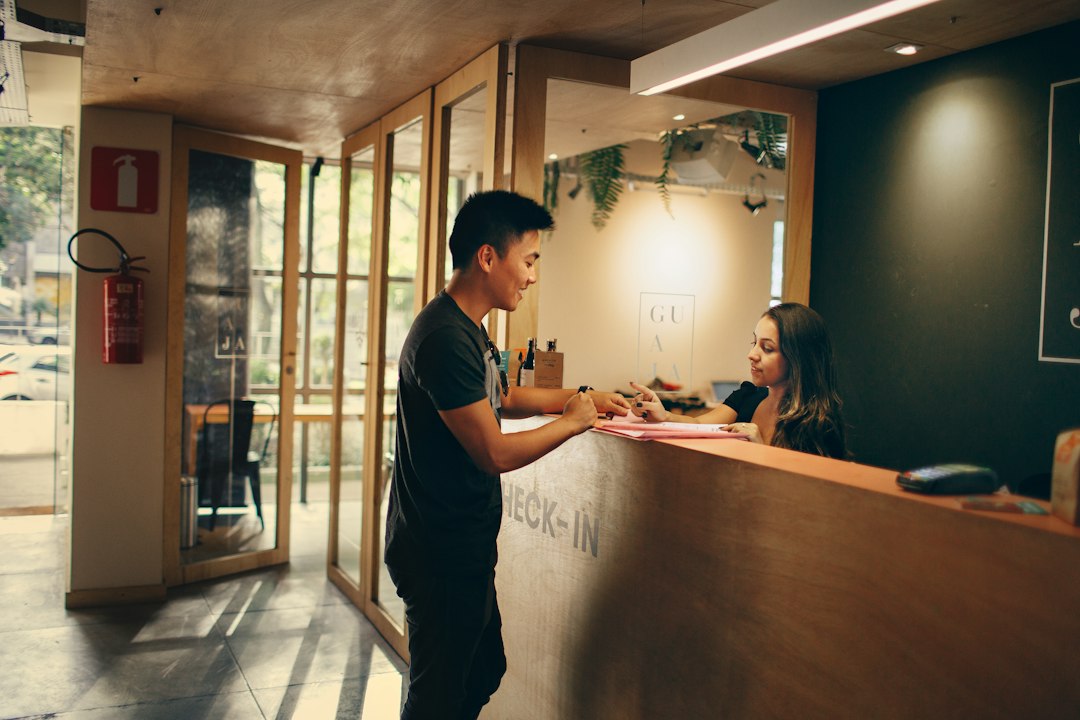
Booking a hotel online is usually the most practical choice because it lets you compare rates, room types and policies before arrival. Booking in person still has a role in spontaneous travel, but it comes with more availability risk and fewer opportunities to compare.
Online and direct desk booking solve different problems; compare the same room conditions. Photo: Dmitry Limonov / Unsplash.
Online vs in-person booking at a glance
| Factor | Online | In person |
|---|---|---|
| Price comparison | Easy to compare several rates | Limited to what reception offers |
| Availability | Can secure a room before arrival | Risk of sell-out |
| Written terms | Usually clear confirmation and policy | Ask for written confirmation |
| Spontaneity | Still possible from a phone | Useful for road trips and unplanned stops |
| Special room needs | Easier to verify in advance | Higher risk of limited choice |
| Price negotiation | Usually fixed by the displayed rate | Sometimes possible, but never guaranteed |
Advantages of booking online
- compare multiple hotels quickly;
- see room categories and policies;
- read recent reviews;
- secure a reservation before traveling;
- compare direct and third-party prices;
- keep written confirmation;
- filter for family rooms, accessible rooms or specific amenities.
Advantages of booking in person
- inspect the immediate location;
- ask specific questions face to face;
- useful for spontaneous road trips;
- avoid committing before reaching the destination;
- sometimes see the room category available that day before paying.
Disadvantages of waiting until arrival
You may find that the hotel is full, only expensive room categories remain, reception is closed, or the walk-in rate is higher than a bookable online rate. The risk is greatest during weekends, festivals, conventions, school holidays and major sporting events.
Is online always cheaper?
No. It is simply easier to compare. The hotel’s direct site, an OTA and the front desk can show different rates or conditions. Member rates, mobile rates, packages and prepaid offers can also make apparently identical rooms difficult to compare.
The correct comparison is the same room type, same dates, same cancellation rules and same inclusions.
When direct online booking is strongest
Check the hotel website after finding a property elsewhere. Direct rates can include different cancellation terms, breakfast, loyalty credit, upgrades or packages even when the headline price looks similar.
Direct booking also simplifies communication if you need a crib, connecting rooms, late arrival, accessibility detail or another request that matters to the stay.
When an OTA is useful
An OTA can be convenient when you are comparing many properties quickly, managing a multi-hotel trip in one account or using a platform-specific reward. The key is to understand who takes payment, who handles changes and what happens if the hotel and platform show different information.
When a walk-in can be reasonable
A walk-in can work on a flexible road trip, outside major events and peak dates, especially when you are willing to keep driving if a property is full. It is a poor strategy when you need a specific location, family room, accessible room or late-night arrival.
Do not rely on the reception desk to beat the internet
Some travelers assume a hotel will always offer a lower rate in person to avoid commission. That is not a reliable strategy. Front-desk staff may have limited authority, while the property’s online system may already be selling the best available public rate.
Five checks before confirming any rate
- Total price including taxes and mandatory fees.
- Exact room type and occupancy.
- Cancellation deadline and penalties.
- Breakfast, parking and other inclusions.
- Payment timing and currency.
For families, accessible rooms and special needs
Reserve in advance. Do not assume the hotel can improvise a connecting room, extra bed, crib or accessible layout at check-in. If a feature is essential, confirm it in writing with the hotel.
For same-day bookings
You can still compare online a few hours before arrival. This often gives you the flexibility of spontaneous travel without walking into several full properties.
On a road trip, stop safely, check several hotels on your phone, compare the final rates and then decide whether to book online or ask at reception.
For late-night arrival
Book ahead and tell the hotel your expected arrival time. Some independent properties do not staff reception all night, and a “same-day” booking after midnight may technically belong to the next hotel night.
Simple decision matrix
- Fixed city break: book online in advance.
- Family trip: book online and confirm room setup directly.
- Road trip with flexible route: compare online the same day.
- Major event dates: reserve early.
- Need an accessible room: reserve and confirm in writing.
- Arriving very late: reserve and notify reception.
Best overall strategy
For planned trips, search and reserve online. For spontaneous travel, check availability online shortly before arrival and then decide whether to book digitally or walk in. This preserves flexibility without relying on blind luck.
Continue comparing hotel options
Compare advance booking with walk-ins in Book a Hotel in Advance or Walk In?. For direct-vs-platform decisions, use our Travel Booking Toolkit and How to Find Cheap Hotels.
Last reviewed: September 2026. Rates, cancellation rules and hotel policies can change; verify the terms shown at the time you book.