Recommended for you
Culinary Destinations: How Food Became My Compass
When I first started traveling, my itineraries were packed with museums, historical landmarks, and architectural wonders. I was determined to see everything a city had to offer, treating food merely as fuel to keep me walking. I would grab whatever was quick, cheap, and near the tourist attractions, completely unaware of the rich cultures I was missing. It was only after a fateful trip to Europe that I realized I had been traveling entirely wrong. I had been visiting places, but I hadn’t been tasting them. This profound shift in perspective led me on a lifelong journey to explore the world’s most authentic culinary destinations. Today, culinary destinations are the sole focus of my travels. I no longer look at a map to find the best monuments; I look at a map to find the best culinary destinations.
For anyone who has never planned a trip around food, the concept of culinary destinations might seem a bit indulgent or overly specific. You might wonder why someone would fly across an ocean just to eat. But the truth is, culinary destinations offer a window into the soul of a culture that no museum can ever replicate. When you visit true culinary destinations, you are engaging with the history, the geography, the struggles, and the triumphs of the local people, all served to you on a plate. The best culinary destinations are not defined by expensive, Michelin-starred restaurants. Instead, the most authentic culinary destinations are often found in bustling street markets, humble family-owned taverns, and the quiet, aromatic kitchens of grandmothers who have spent decades perfecting a single recipe. It is in these spaces that culinary destinations truly come alive.
My obsession with finding the world’s greatest culinary destinations began on a rainy afternoon in Spain. I had taken shelter in a tiny, unassuming bar, soaking wet and utterly exhausted. The bartender, noticing my fatigue, slid a small plate of jamón ibérico and a piece of crusty bread across the worn wooden counter. That simple bite changed everything. It was a revelation. It tasted of the local landscape, of tradition, and of an unapologetic love for quality ingredients. From that moment on, I knew I wanted to dedicate my life to discovering more culinary destinations. I wanted to understand how different cultures expressed their identities through food. Seeking out culinary destinations became my new compass, guiding me to corners of the globe I would never have otherwise considered visiting.
The Awakening: Finding My First Culinary Destinations in Europe
Europe, with its incredibly diverse regional cuisines and deep-rooted food traditions, is arguably one of the most famous regions for culinary destinations. Every country, every province, and sometimes every village has its own unique gastronomic identity. My early explorations of European culinary destinations taught me the importance of slowing down and appreciating the ritual of a meal. In Spain, for example, eating is never a solitary, rushed affair. It is a communal celebration. During my unforgettable journey to Madrid, I learned that the city is one of those rare culinary destinations where the food scene is both deeply historical and vibrantly modern. Walking through the narrow streets of the La Latina neighborhood, moving from one tapas bar to the next, I felt the pulse of the city.
Madrid solidified its place on my personal list of top culinary destinations because it taught me to embrace the chaos of a busy market. If you are serious about exploring culinary destinations, you must visit local markets. I spent days immersing myself in tasting local Spanish street food, savoring sizzling gambas al ajillo, patatas bravas, and the ubiquitous tortilla española. In these culinary destinations, the noise, the smells, and the crowds are all part of the flavor. I realized that to truly experience culinary destinations, you have to eat where the locals eat, stand where they stand, and order what they order. You cannot be shy in these culinary destinations; you must be willing to point, smile, and try things you cannot pronounce.

Leaving Spain, I pointed my compass toward Italy, a country that practically defines the term culinary destinations. Italy is not just one of the great culinary destinations; it is a collection of hundreds of hyper-local culinary destinations, each fiercely proud of its own traditions. I decided to bypass the heavy tourist traffic of Rome and Florence and headed straight to Bologna, affectionately known as ‘La Grassa’ or ‘The Fat One.’ If you are looking for the absolute pinnacle of culinary destinations, Bologna should be at the top of your list. Walking through the medieval streets, the air was thick with the scent of simmering ragù and aged Parmigiano-Reggiano. In these types of culinary destinations, food is treated with a level of reverence that borders on religion.
I will never forget sitting in a tiny trattoria in Bologna, watching an elderly woman meticulously fold tortellini by hand. This is the magic of true culinary destinations. The dedication to craft in these culinary destinations is staggering. When I tasted the tortellini in brodo, the delicate pasta filled with a perfectly balanced mixture of pork, prosciutto, and cheese, floating in a rich, golden capon broth, I literally teared up. It was pure comfort. Italy taught me that the greatest culinary destinations rely on the quality of their ingredients rather than complex techniques. The tomatoes taste more like tomatoes, the olive oil is vibrant and peppery, and the pasta has a satisfying bite. Visiting such culinary destinations makes you acutely aware of how disconnected we have become from our food sources in the modern world.
My European journey through various culinary destinations eventually led me to France. France has long been hailed as the undisputed king of culinary destinations, and for good reason. But instead of seeking out high-end dining in Paris, I wanted to explore the rustic, countryside culinary destinations. I traveled to the rolling hills of Burgundy and the coastal towns of Normandy. In these culinary destinations, I learned about the concept of ‘terroir’—the idea that the food and wine of a region are inextricably linked to the land itself. Eating a pungent, creamy Camembert in a Norman village while sipping local cider is an experience that defines what culinary destinations are all about. These culinary destinations demand your full attention, urging you to savor every complex flavor note.
Expanding My Horizons: The Vibrant Culinary Destinations of Asia
As my palate grew, so did my desire to explore culinary destinations far beyond the comforting borders of Europe. I knew that to truly understand global gastronomy, I needed to travel to Asia. Asian culinary destinations are a sensory explosion. They challenge everything you know about flavor balancing, introducing a dizzying array of spices, herbs, and textures. My first foray into Asian culinary destinations was Thailand. Bangkok is, without a doubt, one of the most intense, electrifying culinary destinations on the planet. The city is a sprawling, chaotic metropolis, but its heart beats in its street food stalls. If you want to experience the raw energy of culinary destinations, you must eat on the streets of Bangkok.
In Bangkok, I learned that the best culinary destinations don’t necessarily have walls or roofs. I spent my nights wandering through neon-lit night markets, the air thick with the smell of holy basil, fish sauce, and grilling meats. Thailand stands out among culinary destinations because of its masterful balance of the four essential flavor profiles: sweet, spicy, sour, and salty. Sitting on a tiny plastic stool on a bustling sidewalk, eating a steaming bowl of Tom Yum Goong that set my mouth on fire while simultaneously cooling me down with its fragrant lemongrass and lime leaves, I understood why people travel thousands of miles to these culinary destinations. The immediacy of the food in these culinary destinations—cooked right in front of you over a roaring open flame—creates an intimate connection between the chef and the diner.
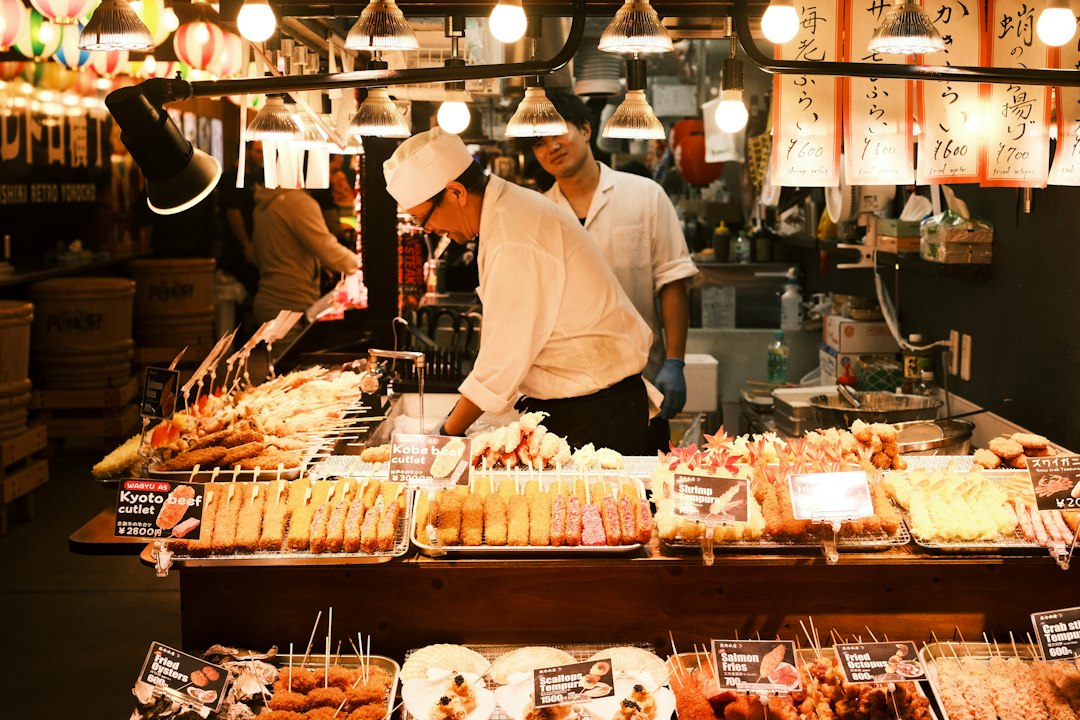
Seeking a stark contrast to the fiery chaos of Thailand, my quest for culinary destinations took me to Japan. Japan is one of the most revered culinary destinations in the world, known for its meticulous precision and deep respect for natural flavors. While planning my ultimate Japan travel bucket list, I knew I had to go beyond sushi and explore the diverse regional culinary destinations the country had to offer. Japan is an archipelago of culinary destinations, from the hearty, warming bowls of miso ramen in Hokkaido to the vibrant street food culture of Osaka, affectionately known as ‘the nation’s kitchen.’ Exploring these culinary destinations requires patience and a willingness to observe the subtle nuances of each dish.
One evening in Kyoto, I had the privilege of experiencing a traditional kaiseki dinner. This multi-course meal is the epitome of why Japan is one of the world’s most elite culinary destinations. Each dish was a work of art, designed to reflect the current season. The presentation in these culinary destinations is just as important as the taste. I was served delicate sashimi arranged to look like a blooming flower, and a clear broth that tasted of the ocean and the forest. Japan taught me that in the finest culinary destinations, eating is an act of mindfulness. You do not rush through a meal in these culinary destinations; you meditate on it. The dedication of Japanese chefs, some of whom spend decades mastering a single element like tamago (egg omelet), showcases the profound depth of these culinary destinations.

Culinary Destinations Closer to Home: The Richness of the Americas
After spending months in Asia, my hunger for new culinary destinations brought me to the Americas. The culinary destinations in North, Central, and South America are incredibly diverse, shaped by centuries of indigenous traditions blending with immigrant influences. I started in Mexico, a country that I firmly believe is one of the most underrated culinary destinations in terms of its complexity. Many people think they know Mexican food, but visiting the true culinary destinations within Mexico, such as Oaxaca and Puebla, completely shatters those preconceptions. Oaxaca is the crown jewel of Mexican culinary destinations, known as the ‘land of seven moles.’
Walking through the vibrant markets of Oaxaca, I was overwhelmed by the colors and aromas. This is a characteristic of great culinary destinations—they engage all your senses immediately. I spent hours watching vendors grind dried chilies, nuts, chocolate, and spices to create the base for their famous mole sauces. Tasting a traditional mole negro, which can contain over thirty different ingredients and take days to prepare, was a spiritual experience. It was dark, smoky, sweet, and spicy all at once. Mexican culinary destinations teach you that food is deeply tied to family and ancestral history. In these culinary destinations, recipes are fiercely guarded treasures, passed down through generations. Eating a simple, hand-pressed blue corn tortilla with fresh salsa in these culinary destinations is a revelation.
Moving north, I decided to explore the culinary destinations within the United States. While the US is often stereotyped for its fast food, it is actually home to some of the most dynamic and innovative culinary destinations in the world. New Orleans, for instance, is one of those incredibly unique culinary destinations where French, African, Spanish, and Native American influences have simmered together to create Creole and Cajun cuisines. Walking through the French Quarter, the smell of dark roux and frying beignets filled the air. New Orleans proves that the best culinary destinations have a distinct rhythm and soul. Eating a bowl of spicy, murky gumbo while listening to a brass band play in the street is a sensory experience that defines why I travel to culinary destinations.
The Unexpected Culinary Destinations: Africa and the Middle East
No exploration of global culinary destinations would be complete without delving into the ancient flavors of Africa and the Middle East. I wanted to experience culinary destinations that were off the typical tourist trail. My journey led me to Egypt, a country whose rich history is mirrored in its complex food culture. When I was looking forward to trying authentic traditional Egyptian food, I quickly realized that Cairo is one of the most historically significant culinary destinations. The city is a melting pot of Mediterranean, North African, and Middle Eastern flavors. These culinary destinations offer a taste of ancient trade routes and centuries of cultural exchange.
In Cairo, I discovered the ultimate street food of these culinary destinations: Koshari. It is a humble, carb-heavy dish made of rice, lentils, macaroni, and chickpeas, topped with a spicy tomato sauce and crispy fried onions. It sounds chaotic, but it is deeply comforting. Eating a bowl of Koshari while listening to the call to prayer echo across the city is a moment that perfectly encapsulates the magic of culinary destinations. Middle Eastern culinary destinations also taught me the art of the mezze—the sharing of small plates like hummus, baba ganoush, and fresh flatbreads. In these culinary destinations, food is a gesture of profound hospitality. A host in these culinary destinations will fill your plate until you can barely move, insisting that feeding a guest is a sacred duty.
How I Choose My Culinary Destinations Today
Over the years, people have frequently asked me how I select my culinary destinations. They want to know the secret to finding the best food in the world. The truth is, my approach to finding culinary destinations has evolved significantly. In the beginning, I relied heavily on internet rankings and famous food critics to tell me which culinary destinations were worth visiting. But I soon realized that the most famous culinary destinations are often not the most authentic ones. When a place becomes universally recognized as one of the top culinary destinations, it can sometimes lose the very charm that made it special in the first place.
Now, when I am hunting for new culinary destinations, I look for the unpolished, the raw, and the deeply local. I look for culinary destinations where the local population is visibly passionate about what they eat. When I wrote my guide to safe adventures for solo travelers, I emphasized that the best way to uncover hidden culinary destinations is to simply talk to people. I ask taxi drivers where they eat after a long shift. I ask market vendors where they go for their Sunday family meals. The answers to these questions will always lead you to the true culinary destinations of a city. The real culinary destinations rarely have English menus, and they almost never have a view of a famous monument.
Another crucial element of exploring culinary destinations is maintaining a sense of curiosity and an open mind. If you travel to culinary destinations with a rigid list of things you refuse to eat, you are doing yourself a disservice. To truly experience culinary destinations, you have to surrender your comfort zone. I have eaten things in remote culinary destinations that I never thought I would—from fermented shark to fried insects—and while not every dish was my favorite, every single one taught me something valuable about the culture. Culinary destinations demand vulnerability. They ask you to trust the chef, to trust the process, and to open yourself up to entirely new sensations.
The Lifelong Impact of Visiting Culinary Destinations
Reflecting on all the culinary destinations I have visited, I am struck by how much this style of travel has changed me as a person. Visiting culinary destinations has made me more patient, more observant, and profoundly more grateful. It has taught me that despite our vast cultural differences, the human desire to sit around a table, share a meal, and connect with one another is universal. Culinary destinations are not just geographical locations; they are emotional landscapes. The memories I have forged in these culinary destinations—the laughter shared over a spilled glass of wine in Italy, the tears of joy from a perfect taco in Mexico, the quiet nod of respect to a sushi master in Japan—are the most treasured souvenirs I possess.
I urge everyone to reconsider how they travel. The next time you plan a trip, don’t just look for beautiful beaches or historical ruins. Look for culinary destinations. Make food the focal point of your journey. Allow yourself to get lost in the markets of these culinary destinations. Strike up a conversation with a local baker or a street food vendor. Let the flavors of these culinary destinations guide your itinerary. I promise you that if you start treating the world as a collection of incredible culinary destinations, your travels will become infinitely richer, more colorful, and deeply satisfying.
My journey through the world’s greatest culinary destinations is far from over. There are still so many flavors I haven’t tasted, so many markets I haven’t explored, and so many grandmothers’ recipes I haven’t learned. Every new country I visit offers the promise of hidden culinary destinations waiting to be discovered. I will continue to travel with an empty stomach and an open heart, always searching for the next great bite. Because in the end, exploring culinary destinations is not just about eating; it is about celebrating the beautiful, delicious diversity of human existence.
Trending & Related Topics
food tourismauthentic foodstreet foodlocal cuisinetravel foodieeating abroadtasting menusmarket foodregional dishesfoodie travelfood culturegastronomy


2 Comments
[…] Travel for Foodies: Exploring Culinary Destinations […]
[…] Travel for Foodies: Exploring Culinary Destinations […]