Recommended for you
The Ultimate Travel Planning Guide: My Personal Blueprint for the Perfect Trip
There is a specific kind of magic that happens the moment you decide to take a trip. Your heart beats a little faster, your imagination runs wild with images of foreign streets and exotic cuisines, and suddenly, the world feels incredibly vast and full of potential. But as any seasoned traveler will tell you, the gap between a daydream and a seamlessly executed adventure is bridged by one crucial element: preparation. Welcome to my ultimate travel planning guide. If you are reading this, you are probably staring at a blank screen, overwhelmed by the countless decisions that lie ahead. Trust me, I have been there. I remember standing in the pouring rain in the middle of Kyoto, completely lost, with a dead phone and a fully booked hostel, realizing that spontaneity without a safety net is just a recipe for disaster. That single chaotic night fundamentally changed how I approach exploring the world.
Since then, I have dedicated myself to mastering the logistics of globetrotting. I wanted to create a comprehensive travel planning guide that doesn’t just list generic tips, but actually walks you through a tried-and-true framework. Whether you are gearing up for a two-week European vacation, a weekend getaway to the coast, or a massive six-month backpacking expedition across South America, having a structured approach is the difference between a trip fraught with anxiety and a life-changing, unforgettable experience. This travel planning guide is written from my own blood, sweat, and tears (and thousands of miles flown). I will show you exactly how to craft an itinerary that balances thrilling adventures with necessary downtime, all while protecting your sanity and your wallet.
Why You Absolutely Need a Comprehensive Travel Planning Guide
You might be thinking, “Isn’t travel supposed to be spontaneous and free?” It absolutely is. However, true freedom on the road comes from having your foundational logistics securely in place. When you don’t have to worry about where you are sleeping tonight or how you will pay for a train ticket tomorrow, your mind is entirely free to soak in the culture, the people, and the breathtaking sights around you. A robust travel planning guide is not meant to be a rigid, minute-by-minute prison sentence; rather, it is a flexible blueprint.
- Financial Peace of Mind: A solid travel planning guide helps you foresee hidden costs. By outlining your budget early, you prevent the dreadful post-vacation credit card shock.
- Maximizing Limited Time: Let’s face it, most of us do not have endless vacation days. An optimized itinerary ensures you spend your precious time experiencing the destination, not sitting in a hotel room googling “what to do near me.”
- Risk Mitigation and Safety: From knowing emergency numbers to having copies of vital documents, proper planning keeps you safe when the unexpected inevitably happens.

Step 1: Defining Your Vision and Core Travel Goals
Every successful journey begins with a clear “why.” Before you ever look at a flight aggregator or a hotel booking site, you need to sit down and ask yourself what you want to get out of this trip. This is the bedrock of my travel planning guide. Are you desperately in need of relaxation and doing absolutely nothing on a white sand beach? Are you craving cultural immersion, wandering through ancient museums and eating street food? Or are you seeking adrenaline, planning to hike rugged trails and conquer mountains?
Defining your travel style will dictate every subsequent decision. For instance, if you are traveling with a partner or a group, this is the time to have a very honest conversation about expectations. I once ruined a perfectly good trip to Italy because I wanted to visit every historical ruin from dawn till dusk, while my partner just wanted to sip Aperol Spritzes in a piazza. Compromise is key, and setting those expectations early is a cornerstone of this travel planning guide.
Step 2: Building Your Financial Blueprint
Money is the biggest hurdle for most aspiring travelers, which is why financial strategy features so heavily in this travel planning guide. Establishing a realistic budget is step two. I break my travel budget down into five distinct categories: Transportation (flights, trains, rental cars), Accommodation, Food and Drink, Activities, and the all-important “Emergency/Buffer” fund.
Do your research on the daily cost of living in your chosen destination. A week in Zurich will require a vastly different budget than a week in Hanoi. Once you have a rough daily estimate, add 15% to 20% to it. Why? Because things always cost more than you think. You will want that extra gelato, you will take a taxi when it rains instead of walking, and you might have to pay unexpected baggage fees. If you need help mastering the art of budget flying, I highly recommend reading up on how to find the best flight deals every time to shave hundreds off your initial costs.
Step 3: Finding the Perfect Destination and Researching Deeply
Now comes the fun part of our travel planning guide: choosing where to go! Sometimes the destination chooses you—a friend’s wedding, a lifelong dream, or a ridiculous flight deal you simply couldn’t pass up. Other times, you have a time frame and a budget, but no specific location in mind. I use a combination of Instagram, travel blogs, Google Earth, and Pinterest to build a visual inspiration board.
Once you select a country or city, go deep into the research. Do not just look up the top ten tourist attractions. Look for local blogs, read up on the history, understand the cultural norms, and figure out the public transportation system. The deeper you research, the more enriched your experience will be. In my personal travel planning guide methodology, I create a customized Google Map. I drop pins for restaurants, viewpoints, museums, and transit hubs. This way, when I am wandering around a neighborhood, I can open my map and instantly see what places I previously vetted nearby.
Step 4: The Art of Crafting a Balanced Itinerary
If there is one section of this travel planning guide you should memorize, it is this one. Over-scheduling is the ultimate rookie mistake. When you pack five major activities into a single day, you are no longer traveling; you are completing a grueling checklist. You will end up exhausted, cranky, and unable to appreciate where you are.
My golden rule for any travel planning guide is the 70/30 rule. Plan 70% of your day and leave 30% completely open. Book your major “must-do” activities in the morning when your energy is highest. Leave the afternoons open to wander, get lost, sit in a cafe, or simply rest. Transition days (the days you move from one city to another) should be treated as full “lost” days in your itinerary. Checking out, navigating to a train station, traveling, finding your new hotel, and checking in takes vastly more mental and physical energy than you anticipate.
Step 5: Strategic Booking of Flights and Accommodation
Booking the logistics is where this travel planning guide gets highly actionable. For flights, flexibility is your greatest asset. Use incognito browsers and aggregator tools to track prices over a few weeks. Try to fly on Tuesdays or Wednesdays, which are traditionally cheaper than weekend departures. When it comes to accommodation, I always look for places that offer free cancellation. This allows you to lock in a great rate months in advance while giving you the freedom to change your mind if your itinerary shifts.
Furthermore, decide what type of accommodation serves your trip best. Are you looking for the social atmosphere of a boutique hostel, the reliable comfort of a hotel, or the local feel of a short-term apartment rental? Consider the location critically. Saving $20 a night by staying far outside the city center is never worth it if you end up spending $30 a day on transit and wasting two hours commuting.
Step 6: Mastering the Packing Process
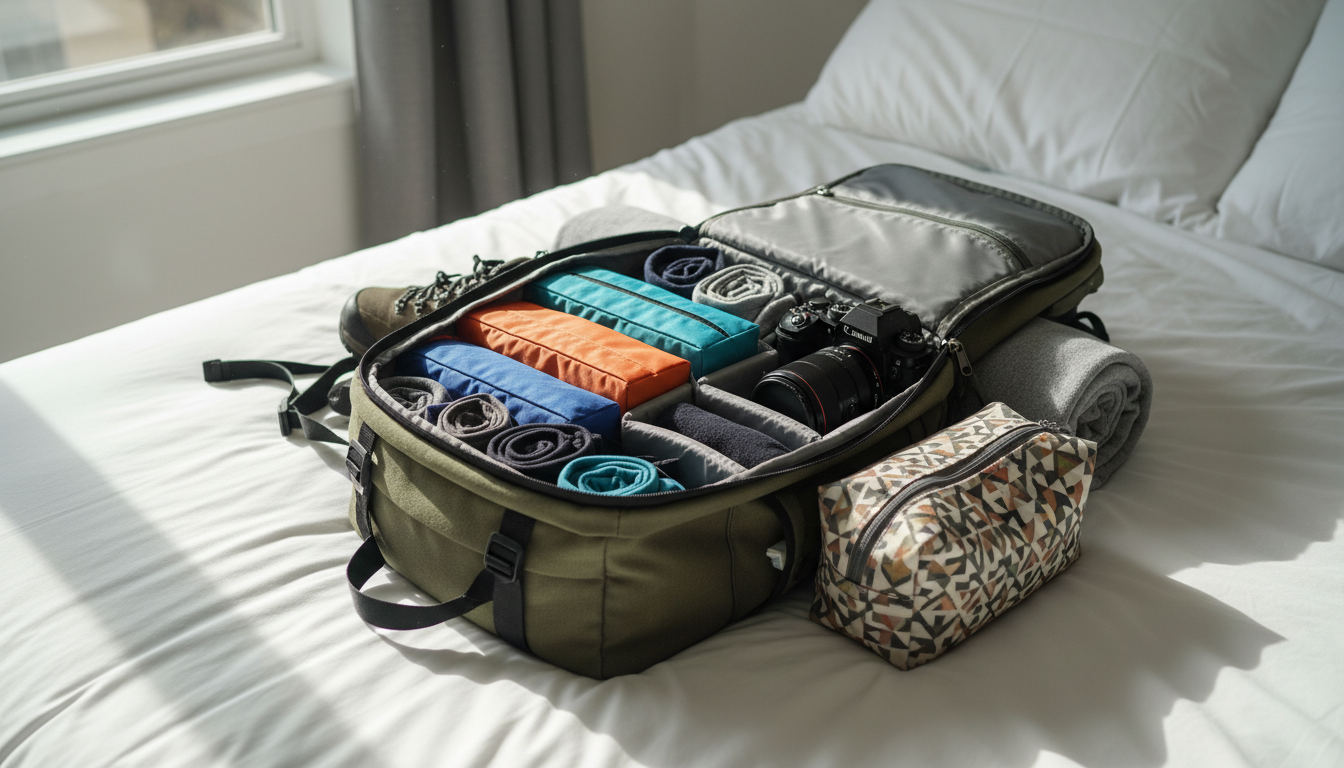
Packing is an art form, and no travel planning guide is complete without addressing it. I used to be a chronic over-packer, lugging a massive suitcase over ancient cobblestones, sweating and cursing every step. Now, I travel exclusively with a carry-on, no matter if the trip is five days or five weeks. It gives you incredible mobility, saves you money on checked bag fees, and eliminates the risk of the airline losing your luggage.
The secret is the capsule wardrobe: bringing items that all intermix and match in the same color palette. Roll your clothes instead of folding them, and invest in high-quality packing cubes. If you truly want to master this skill, take a deep dive into the ultimate packing light guide. Remember, you can do laundry anywhere in the world. Bring versatile layers, comfortable walking shoes (never bring brand new, unbroken shoes on a trip), and leave the “just in case” items at home.
Step 7: Crucial Documentation and Travel Insurance
This is the least glamorous part of my travel planning guide, but undoubtedly the most important. Check your passport expiration date immediately. Many countries require your passport to be valid for at least six months beyond your planned date of departure. Research visa requirements for your nationality well in advance; some visas can take weeks to process.
Let me be incredibly clear: if you cannot afford travel insurance, you cannot afford to travel. I have seen twisted ankles turn into $10,000 hospital bills, and I have had expensive camera gear stolen from locked compartments. Travel insurance covers medical emergencies, trip cancellations, lost luggage, and emergency evacuations. It is the ultimate peace of mind. Familiarize yourself with a comprehensive travel insurance guide to understand exactly what coverage you need before you board that plane.
Advanced Tips to Elevate Your Travel Planning Guide Strategy
To take your preparation to the next level, integrate some digital savvy into your travel planning guide routine. Download offline maps via Google Maps so you can navigate without using roaming data. Get the Google Translate app and download the local language offline, prioritizing the camera translation feature which is a lifesaver for reading menus.
Notify your bank that you will be traveling abroad to prevent your debit cards from being frozen for “suspicious activity.” Carry a backup credit card hidden away from your main wallet, along with a small stash of emergency US dollars or Euros. Finally, create a digital folder on your phone (and email it to yourself and a trusted family member) containing photos of your passport, driver’s license, travel insurance policy, and all your booking confirmations.
Managing the Inevitable: When Things Go Wrong
Even if you follow every single step in this travel planning guide to the letter, something will go wrong. A train will be delayed, it will rain on your planned beach day, or you will get food poisoning from a questionable street vendor. The final lesson I want to impart is about mindset. How you react to these hurdles defines the quality of your trip.
Embrace the chaos. Some of my absolute favorite travel memories—the ones I still talk about at dinner parties years later—were born out of catastrophic logistical failures. When things go off-script, take a deep breath, assess your options, and remember that you are on an adventure. Flexibility is the ultimate travel skill.
Final Thoughts: Your Journey Begins Now
Creating and executing a flawless trip is a tremendously rewarding process. By utilizing this comprehensive travel planning guide, you are taking control of your destiny and setting the stage for an extraordinary adventure. You have defined your goals, managed your budget, researched like a professional, and protected yourself against the unexpected. You are no longer just a tourist; you are a savvy, prepared traveler ready to embrace the world.
The world is vast, beautiful, and waiting for you to explore it. So open a new tab, pull up a map, and start dreaming. Your next great adventure is just a few perfectly planned steps away. I hope this travel planning guide serves as your faithful companion as you chart your course into the unknown. Safe travels, and never stop exploring!