Recommended for you
Sustainable Travel: The Ultimate Guide to Responsible Tourism
Ultimate Rural France Travel Guide: The Art of Slow Travel
Let us talk about escaping to the beating heart of Europe. We aren’t talking about the frantic hustle of Paris, the packed museums, or the glitz of the Riviera. No, we are talking about the real French countryside—the land of sleepy, sun-drenched villages, rolling vineyards, and a silence so profound it almost hums in your ears. Welcome to my definitive rural France travel guide, where we will explore a style of journeying that prioritizes deep, meaningful connection over ticking boxes on a frantic checklist.
Over the years, I have actively traded exhausting city breaks for this profoundly slower pace, and honestly? It has become my absolute favorite way to unplug, recharge, and rediscover the joy of simply being alive. This rural France travel guide is born out of my own personal experiences getting delightfully lost on country roads, attempting to speak broken French with local bakers, and sipping wine on the terrace of a centuries-old farmhouse. If you are desperate to escape modern burnout, you are in exactly the right place. Read on as we dive deep into everything you need to know in this comprehensive rural France travel guide.
Stepping Back in Time: The Philosophy of Slow Travel
The first thing that hits you when you leave the city limits behind is the pace. Everything slows right down, almost to a standstill. Forget rushing for crowded metros or battling aggressive tourist crowds to get a photograph. Here, your biggest, most stressful decision of the morning might simply be whether to stroll down to the local boulangerie for warm croissants right now, or wait ten minutes until the coffee finishes brewing.
Any good rural France travel guide must emphasize this philosophical shift. There is an incredible, almost tangible sense of peace that settles over your shoulders in the countryside. You stop looking at your watch and start noticing the little things: the highly specific, rhythmic chime of the village church bells ringing the hour, the unmistakable scent of damp earth and crushed lavender after a brief morning rain, and the intensely vibrant colors of seasonal local produce stacked high in wooden crates.
Slow travel is not just a buzzword; it is a vital survival mechanism for the modern soul. By following the principles laid out in this rural France travel guide, you permit yourself to linger over a three-hour lunch, to pull the car over just to admire a field of blooming sunflowers, and to engage in long, meandering conversations with locals, even if you are mostly relying on dramatic hand gestures to get your point across.
The Charm Offensive: Accommodations and Renting a Gîte
Forget the sprawling, soulless corporate resorts; the French countryside is entirely about character, history, and charm. A cornerstone of this rural France travel guide is teaching you where to stay. I always recommend renting a gîte—which is essentially a self-catering holiday cottage typically found in rural areas. These magnificent accommodations are often centuries old. You might find yourself sleeping in a meticulously converted stone barn, a rustic farmhouse, or even a minor chateau.
These buildings come complete with creaky, uneven wooden floors, massively thick stone walls that naturally keep the interior refreshingly cool during the blazing summer months, and usually a private little garden perfect for lazy, extended breakfasts or evening glasses of local wine. Waking up, pushing open heavy wooden shutters, and looking out over an endless expanse of vineyards feels like a moment ripped straight from a classic romantic film.
What to Look For in a Rural Rental
When booking your stay through the lens of this rural France travel guide, consider the following non-negotiables:
- Proximity to a bakery: You will want to be within walking or easy biking distance of fresh bread. It is a daily ritual you do not want to miss.
- Outdoor space: Whether it is a tiny terrace or a sprawling lawn, having a private outdoor area is essential for evening aperitifs.
- Authenticity over luxury: Embrace the quirks. A slightly squeaky bed frame or a quirky shower is a fair trade for 300 years of architectural history.
- A welcoming host: Many gîte owners live on the same property or nearby. They are the ultimate, unofficial rural France travel guide for their specific village, offering tips no guidebook ever could.
Top Regions to Explore in Your Rural France Travel Guide
France is massive, and its countryside is wildly diverse. You cannot see it all in one trip, which is why this rural France travel guide breaks down a few of my absolute favorite regions to help you narrow down your search.
The Dordogne: Castles, Rivers, and Prehistory
Located in the southwest, the Dordogne is exactly what you picture when you dream of rural France. It is a land of dramatic limestone cliffs, winding rivers perfect for lazy afternoon canoe trips, and more medieval castles than you can count. The food here is rich and unapologetic—think truffles, walnuts, and duck. As I compile this rural France travel guide, the Dordogne remains my top recommendation for families and history buffs alike. You can explore prehistoric cave paintings in Lascaux in the morning and wander through a village that looks unchanged since the 14th century in the afternoon.
Provence: Lavender Fields and Endless Sunshine
Ah, Provence. It is impossible to write a rural France travel guide without mentioning the sun-drenched south. The light here is different—golden, soft, and famously inspiring to artists like Van Gogh and Cézanne. Here, slow travel means wandering through fields of purple lavender, browsing outdoor markets filled with colorful ceramics and fragrant soaps, and drinking crisp rosé wine as the sun sets. The villages of the Luberon, perched precariously on hilltops, are the absolute pinnacle of countryside charm.
Alsace: Fairytale Villages and White Wine
If you head east toward the German border, the architecture and culture shift dramatically. Alsace is famous for its half-timbered houses painted in vibrant shades of pink, blue, and yellow, adorned with overflowing window boxes of geraniums. A proper rural France travel guide will point you toward the Route des Vins (Wine Route), where you can cycle between immaculate, tiny villages tasting world-class Rieslings and Gewürztraminers.
Market Days: The Beating Heartbeat of Rural Life
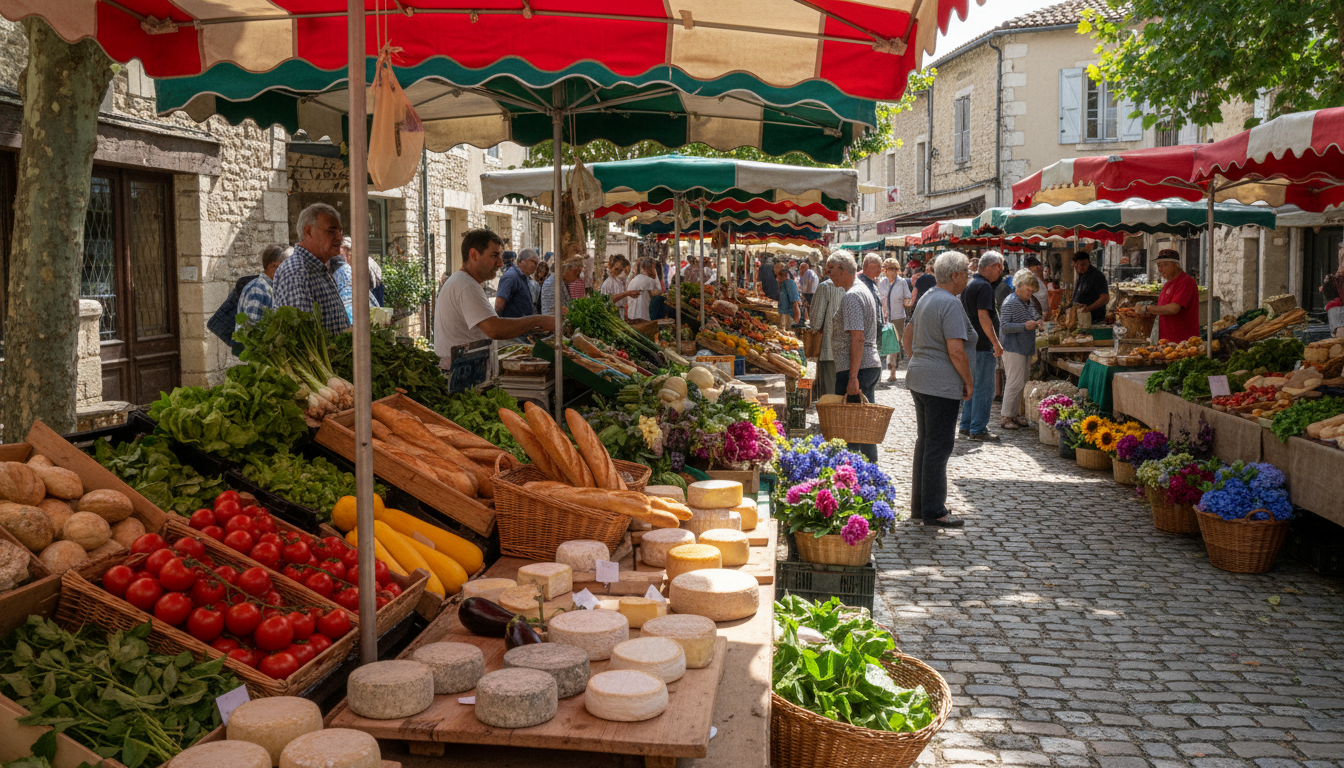
If there is one mandatory activity I stress in this rural France travel guide, it is attending a local market. Market days are the absolute soul of rural life in France. This isn’t just about grabbing a few groceries for dinner; it is a major social and cultural event. The entire village turns out.
The sensory explosion is immediate. The mouthwatering smell of rotisserie chicken dripping fat onto roasting potatoes mingles with the sharp scent of ripe, aged cheeses. Stalls overflow with whatever is perfectly in season—bright red strawberries, massive heirloom tomatoes, or earthy autumn mushrooms. You will find local beekeepers selling incredibly complex jars of honey, artisans offering handcrafted olive oil soaps, and inevitably, a table of delightfully quirky antiques.
It’s vibrant, beautifully noisy, and the perfect environment to practice your rusty French while ordering some artisanal saucisson or a massive wedge of Comté cheese. One of the best tips in this rural France travel guide: even if your French is terrible (and mine certainly was when I first started visiting), a genuine smile, a polite ‘Bonjour’, and a willingness to try will usually earn you immense goodwill from the vendors.
Gastronomy: Simple, Local, and Unbelievably Delicious
This is where any authoritative rural France travel guide must spend a significant amount of time. Gastronomy in the countryside isn’t primarily about fussy, overly complicated Michelin stars (though you can absolutely find some spectacular hidden culinary gems if you look). It is primarily about incredible, unmatched quality. It is about local ingredients treated with the utmost respect.
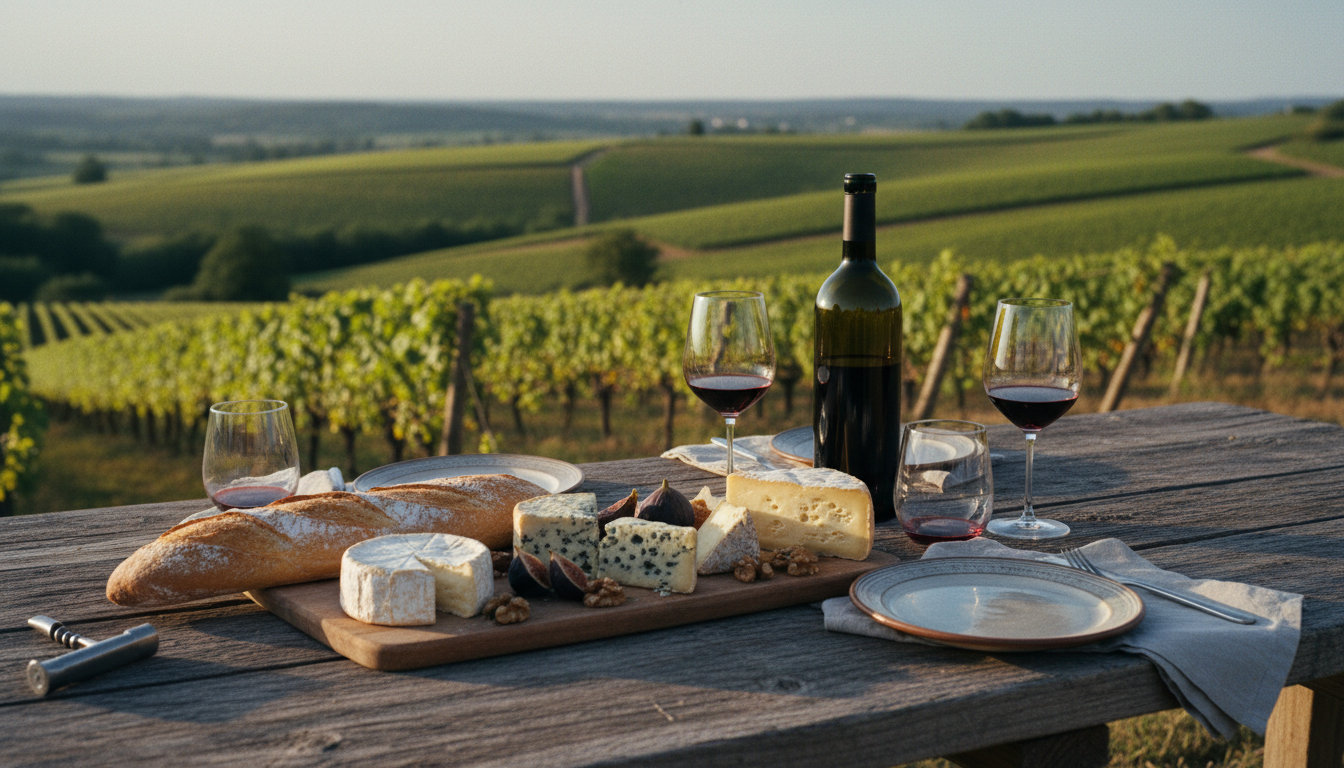
As you follow the advice in this rural France travel guide, you will quickly learn that a meal made of crusty baguettes still radiating heat from the oven, flavorful tomatoes that actually taste like sunshine, and cheese that ranges from mild and creamy to pungent and powerful, is often better than a five-course restaurant meal.
And then, of course, there is the wine. The availability of excellent, shockingly affordable wine is one of the greatest joys of the French countryside. Often, you can buy a phenomenal bottle sourced directly from the vineyards you just drove past for less than the cost of a basic coffee back home. I highly recommend adopting the local habit of pairing your meals strictly with the wine produced in that specific region—it is a rule of thumb in this rural France travel guide that will never steer you wrong.
Practical Tips for Navigating the Countryside
To ensure your trip is as flawless as possible, this rural France travel guide would not be complete without some hard-earned logistical advice.
Renting a Car is Essential
While France’s train network (the TGV) is phenomenal for zipping between major cities, it will not help you deep in the countryside. To truly embrace the recommendations in this rural France travel guide, you must rent a car. Having your own vehicle allows you to take impulsive detours down intriguing dirt roads, stop at isolated farm stands, and access tiny villages completely ignored by public transit. Just be prepared for incredibly narrow roads and the occasional tractor traffic jam!
The Reality of Sunday Closures
A crucial lesson I include in my rural France travel guide: Sunday is a day of rest. Do not expect to roll into a village at 4 PM on a Sunday and find a bustling grocery store. Almost everything shuts down tightly by Sunday afternoon, and many restaurants close on Mondays to recover from the weekend. Plan your meals and grocery runs accordingly, or you might find yourself eating leftover crackers for dinner.
Embrace the Language
You do not need to be fluent, but learning a few basic phrases is a core tenant of this rural France travel guide. Always, without fail, say ‘Bonjour, Madame/Monsieur’ when entering a shop, and ‘Merci, au revoir’ when leaving. It is considered terribly rude in French rural culture to simply walk into a store and start browsing in silence. A little effort goes a remarkably long way in bridging cultural gaps.
Keep Exploring
If you are passionate about intentional, immersive trips and want to continue your journey beyond the French borders, check out our extensive insights on exploring the world mindfully:
Sustainable Travel: The Ultimate Guide to Responsible Tourism →
Final Thoughts: Let the Countryside Change You
Embracing the slow travel philosophy outlined in this rural France travel guide allows you to fundamentally reconnect with the simpler, deeply satisfying pleasures of life. Whether it is lingering over the phenomenal food, absorbing the incredibly dense history, or simply sitting on a stone wall and listening to the profound silence, the countryside offers a rejuvenating escape unlike any other place on earth.
When you strip away the massive itineraries and the frantic need to see ‘everything,’ you give yourself the greatest luxury of all: time. Time to breathe. Time to taste. Time to simply exist. I hope this rural France travel guide inspires you to pack a light bag, rent a slightly impractical car, and get wonderfully, unapologetically lost somewhere beautiful in the heart of France. Bon voyage!