Recommended for you
Ultimate Guide to Traditional Egyptian Food: A Culinary Journey Beyond the Pyramids
Honestly, if you travel to the land of the Pharaohs and only focus on the ancient sites, you are missing out on a massive part of the experience. The true soul of the country lies in traditional Egyptian food, a cuisine that is hearty, flavorful, deeply satisfying, and tells a story all its own. From the bustling, aromatic streets of Cairo to the tranquil, sun-drenched banks of the Nile in Aswan, every bite is a testament to thousands of years of agricultural and culinary evolution.
While the Great Pyramids of Giza, the Sphinx, and the Valley of the Kings rightfully get all the international glory, the local kitchens are where the real, everyday magic happens. I quickly learned during my travels that diving deep into traditional Egyptian food is an absolute necessity to truly understand the culture. The people are incredibly hospitable, and sharing a meal is the ultimate expression of that warmth.
After eating my way through local markets, family-run eateries, and chaotic street carts in Cairo, Luxor, and Alexandria, I have put together this comprehensive guide. Here is my personal take on why this incredible cuisine deserves your full attention, and exactly what you need to order to eat like a true local.
Why Traditional Egyptian Food is a Cultural Revelation
Think less fussy, pretentious fine dining and more incredibly satisfying, often humble dishes packed with profound, slow-cooked flavor. What makes traditional Egyptian food so special is that it feels like it has been perfected over generations—because it literally has. The foundation of traditional Egyptian food relies heavily on the fertile soil of the Nile Delta.
As a result, there is a massive reliance on legumes. Fava beans and lentils are the undisputed kings here, making many staples naturally vegetarian or vegan. You will also find an abundance of fresh vegetables, rice, and, of course, bread. Bread is so vital to traditional Egyptian food that the local word for it, Aish, translates directly to ‘life’.
Specifically, you will encounter Aish Baladi, the essential whole wheat pita that accompanies almost every single meal. Spices like cumin, coriander, cardamom, and garlic are used generously in traditional Egyptian food, but rarely to create intense, palate-destroying heat. Instead, they create a warm, aromatic, and earthy depth that genuinely comforts the soul. Exploring traditional Egyptian food is like wrapping yourself in a warm, culinary blanket.
The Top 12 Traditional Egyptian Food Dishes You Must Try
If you want to eat like a local and experience traditional Egyptian food in its most authentic form, these are the dishes you absolutely cannot leave the country without trying. If you are planning a Vacation in Egypt, consider this your ultimate culinary bucket list.
1. Koshari: The Undisputed National Dish
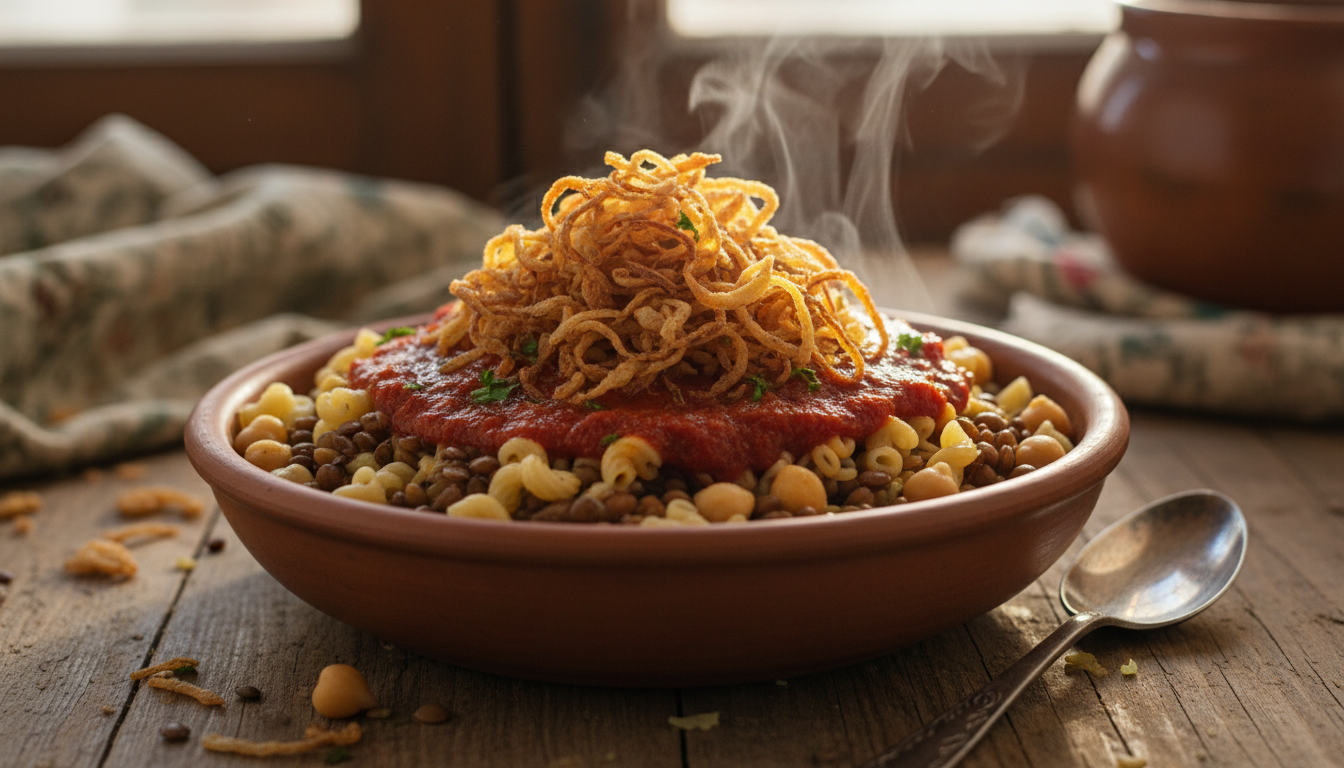
Let’s start with the undisputed heavyweight champion of traditional Egyptian food. Forget everything you think you know about carb-loading. Koshari is a wild, wonderful, and entirely vegan mix of rice, macaroni, lentils, and chickpeas. It is then topped with a spicy, tangy tomato-vinegar sauce, a splash of fragrant garlic water known as daqqa, and a massive handful of crispy fried onions.
It sounds chaotic, maybe even completely bizarre on paper, but trust me, it works miraculously. It is a textural and flavor explosion, unbelievably cheap, and utterly addictive. Found everywhere from specialized Koshari joints to street carts ringing bells to attract customers, Koshari is the very definition of traditional Egyptian food at its finest and most accessible.
2. Ful Medames: The Breakfast of Champions
This is the power breakfast of the nation, but honestly, it is phenomenal at any time of day. When exploring traditional Egyptian food, Ful (pronounced ‘fool’) is unavoidable. It consists of slow-cooked fava beans, either mashed or left whole, heavily seasoned with olive oil, cumin, garlic, lemon juice, and occasionally a hint of chili.
Scooped up with fresh Aish Baladi bread, Ful is cheap, highly nutritious, and keeps you full for hours as you explore ancient temples. It is the backbone of traditional Egyptian food for the working class and the elite alike.
3. Ta’ameya: The Authentic Egyptian Falafel
You may think you know falafel, but traditional Egyptian food takes it to another level. Ta’ameya is Egypt’s brilliant answer to the beloved street food. Crucially, it is made with crushed fava beans instead of chickpeas (which is the Levantine way). This simple swap gives it a distinctively vibrant green interior from fresh herbs and a lighter, fluffier texture with a crispier outer shell.
It is almost always served stuffed into a hot pita alongside fresh tomatoes, cucumber, and a heavy drizzle of tahini sauce. Eating a fresh Ta’ameya on a bustling Cairo morning is a traditional Egyptian food experience you will never forget.
4. Molokhia: The Green Soup
Of all the dishes in the traditional Egyptian food repertoire, Molokhia might be the most polarizing for foreigners, primarily due to its unique, slightly viscous or mucilaginous texture. It is a soup or stew made from finely chopped jute leaves, cooked in a rich meat broth—often chicken, rabbit, or shrimp if you are near the coast.
The magic happens at the end with the tasha: a sizzling mixture of garlic and coriander fried in ghee, poured over the soup right before serving. It has a strong, distinct, earthy flavor. While some love it instantly and others find it an acquired taste, it is so fundamentally intertwined with traditional Egyptian food that you owe it to your palate to try it at least once.
5. Mahshi: Stuffed Vegetable Comfort
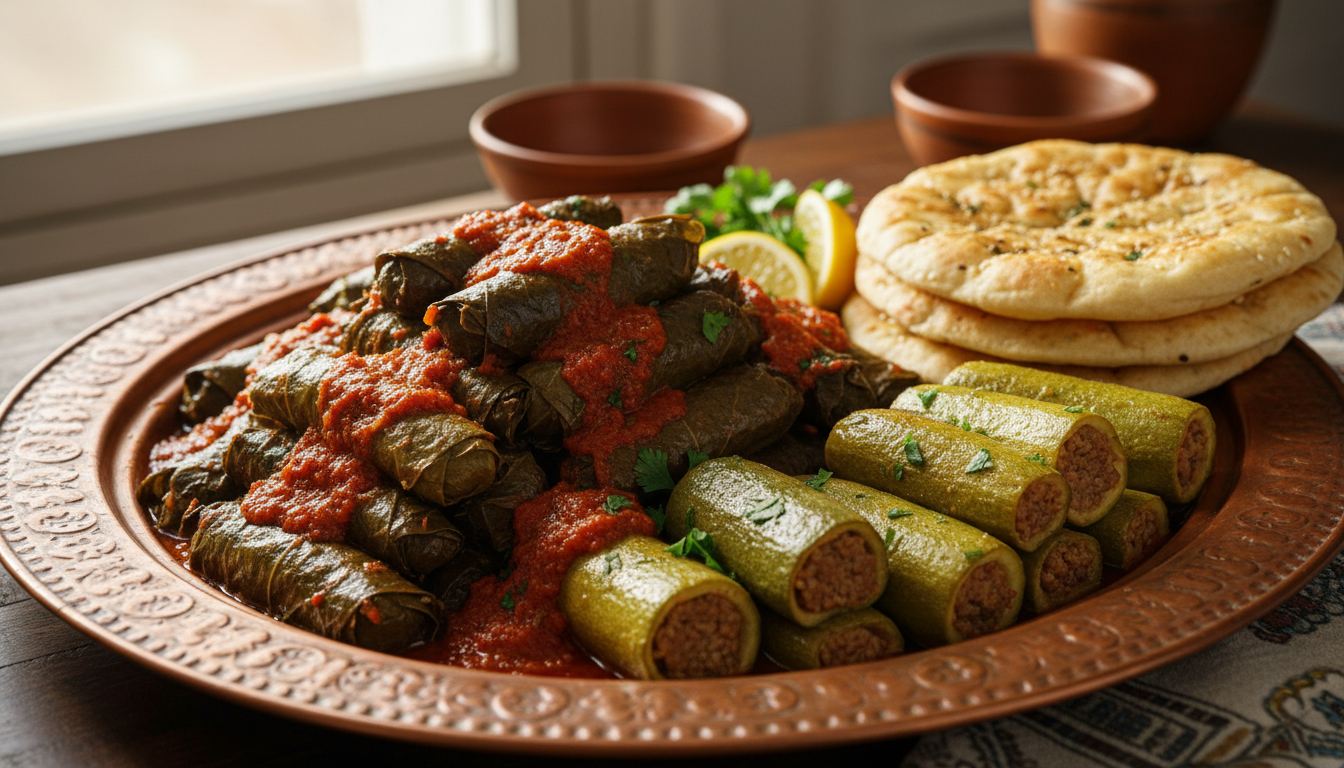
Literally meaning ‘stuffed’, Mahshi is a staple of traditional Egyptian food that reminds every local of their mother’s home cooking. It refers to a variety of vegetables—like zucchini, bell peppers, eggplant, cabbage leaves, or delicate grape leaves—meticulously hollowed out and filled with a glorious mixture of rice, tomatoes, onions, and massive amounts of fresh herbs like dill, parsley, and cilantro.
Sometimes minced meat is added, but the vegetarian version is incredibly common. Simmered in a savory tomato-based broth until tender, Mahshi is pure, unadulterated comfort food and a beautiful representation of traditional Egyptian food.
6. Shawarma: The Middle Eastern Staple with an Egyptian Twist
While Shawarma is found throughout the Middle East, the way it is prepared as a traditional Egyptian food staple has its own flair. Marinated cones of beef or chicken roast slowly on a turning spit, their juices locking in intense flavor. The meat is shaved off and packed into soft buns or wrapped in flatbread, often accompanied by garlic sauce (tomya) for chicken, or tahini for beef. It’s the ultimate late-night traditional Egyptian food after a long day of sightseeing.
7. Hawawshi: The Meat-Stuffed Flatbread
If you love meat pies or stuffed breads, Hawawshi will be your new favorite traditional Egyptian food. It is essentially minced meat heavily spiced with onions, pepper, parsley, and sometimes a kick of chili, stuffed into raw pita bread dough (or Aish Baladi), and then baked in a wood-fired oven. The bread absorbs the savory fat of the meat while getting perfectly crispy on the outside. It is hearty, deeply savory, and an absolute must-try.
8. Macarona Béchamel: The Unexpected Italian Influence
You might be surprised to find baked pasta on a list of traditional Egyptian food, but Macarona Béchamel is a cornerstone of family gatherings and festive meals. A beautiful collision of Mediterranean influences, it features layers of penne pasta, spiced minced meat in tomato sauce, and a phenomenally thick, creamy layer of béchamel sauce on top, baked until golden and bubbling. It’s rich, heavy, and the ultimate comfort food.
9. Fiteer Baladi: The Egyptian Pizza
Dating back to the time of the Pharaohs, Fiteer Baladi is a flaky, multi-layered pastry that can be served sweet or savory. As a savory traditional Egyptian food, it functions much like a pizza, stuffed with cheese, meats, and vegetables. As a sweet treat, it is served plain with a side of dark molasses (honey) and fresh clotted cream (eshta). The buttery, crispy layers make it one of the most decadent items you can eat.
10. Bamia: The Hearty Okra Stew
Okra often gets a bad reputation in Western cuisines, but traditional Egyptian food knows exactly how to handle it. Bamia is a robust stew made with okra, chunks of tender lamb or beef, and a rich, heavily spiced tomato sauce. Cooked down until the meat falls apart and the okra is soft and flavorful, it is traditionally served with a side of rice or scooped up with bread. It exemplifies the slow-cooked nature of traditional Egyptian food.
11. Grilled Meats: Kebab and Kofta
You will smell the charcoal grills long before you see them. Kebab (chunks of marinated grilled meat, usually lamb or veal) and Kofta (spiced minced meat molded onto skewers) are pillars of traditional Egyptian food. Served smoking hot with a massive array of dips, salads, and fresh bread, they represent the simpler, celebratory side of traditional Egyptian food, proving that quality meat and fire are sometimes all you need.
12. Om Ali: The National Dessert
You cannot discuss traditional Egyptian food without ending on a sweet note. Om Ali, which translates to ‘Ali’s Mother’, is essentially an Egyptian bread pudding. Made with pieces of flaky pastry blended with pistachios, coconut flakes, raisins, and plenty of sugar, it is drenched in hot milk and baked until the top is golden brown. It is rich, creamy, and arguably the most comforting dessert on the planet.
Navigating the Street Food Scene Safely
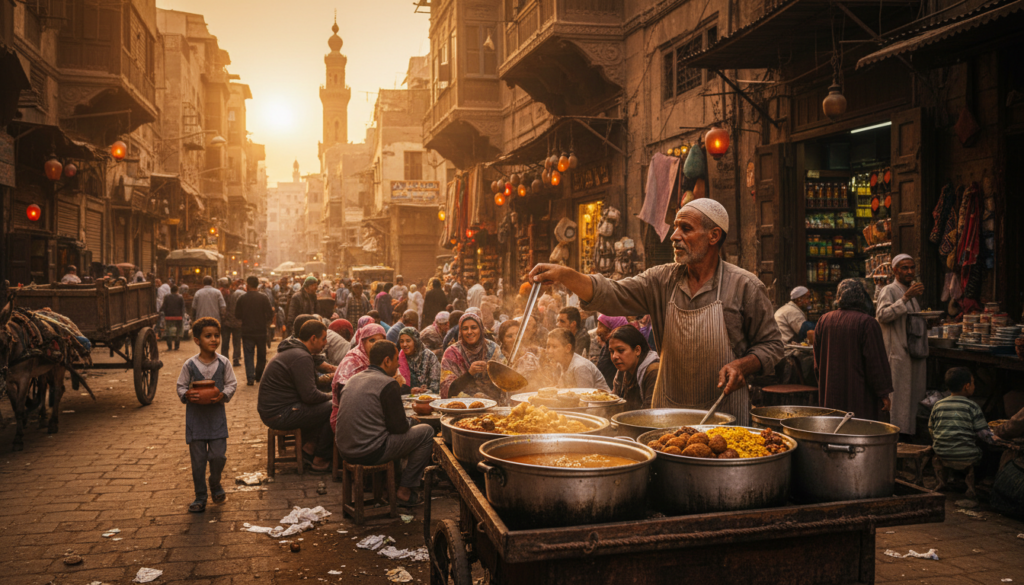
Many travelers are hesitant to eat street food, but avoiding it means missing out on the beating heart of traditional Egyptian food. To enjoy the experience safely, follow the locals. If a food cart has a massive line of Egyptians waiting for their Koshari or Ful, it means the food is fresh, the turnover is high, and it is safe to eat.
I found that sticking to piping hot, cooked foods rather than raw salads on the street minimized any risk. Embrace the chaos, pull up a plastic chair on the sidewalk, and sip on some hot mint tea. If you’ve been wondering Is Egypt on Your Bucket List?, the street food alone should convince you to book a flight immediately.
Final Thoughts on the Magic of Traditional Egyptian Food
Whether you are diving face-first into a massive bowl of Koshari on a noisy, vibrant Cairo street, or enjoying a slow, romantic dinner of stuffed vine leaves while watching the feluccas sail by on the Nile, traditional Egyptian food is an adventure all its own. It is a cuisine that requires you to roll up your sleeves, use your hands, and fully immerse yourself in the culture.
The beauty of traditional Egyptian food is its lack of pretense. It is food designed to feed families, to bring communities together, and to celebrate life. By exploring these dishes, you aren’t just filling your stomach; you are partaking in a living, breathing history. Be brave, try the roadside Ta’ameya, accept the hospitality, and let traditional Egyptian food be the highlight of your journey.