
Recommended for you
The Ultimate Travel Journaling Guide: My Personal Method for Documenting Adventures
I still remember the exact scent of the air in a tiny cafe hidden in the back alleys of Hanoi. It was an intoxicating mix of robusta coffee beans, sweet condensed milk, and the faint, damp smell of an approaching monsoon. I do not remember this vivid detail simply because I possess a photographic memory; I remember it because I wrote it down in that exact moment. If you have ever felt the panic of a fading memory after an incredible trip, you need a solid travel journaling guide to help you preserve those experiences. Over the years, I have transformed my chaotic, scribbled travel notes into a deeply personal, organized archive of my life’s greatest adventures. This comprehensive travel journaling guide is born from trial, error, and countless ink-stained fingers across dozens of countries.
Mastering the art of chronicling your trips allows you to preserve the ephemeral magic of your journeys, ensuring that the essence of your adventures remains vibrant for decades. In this editorial travel journaling guide, I will walk you through my personal framework for documenting travels. From choosing the absolute best medium to integrating sensory details and overcoming the intimidating blank page, this is your roadmap to becoming a master chronicler of your own life.
Why You Need a Travel Journaling Guide in the Digital Age
In an era where we can snap thousands of photos on our smartphones and upload them instantly to the cloud, you might wonder why a travel journaling guide is even necessary. The truth is, photographs capture what a place looks like, but words capture how a place feels. A picture of a quiet beach in Bali is beautiful, but it lacks the context of the warm wind, the taste of salt on your lips, or the specific conversation you had with a local fisherman.
My reliance on this travel journaling guide method stems from the realization that human memory is incredibly fallible. We think we will never forget the name of that incredible street food vendor in Mexico City or the feeling of summiting a mountain in Patagonia, but time erodes these sharp details. A journal acts as an emotional time capsule.
Furthermore, maintaining a daily writing habit while on the road forces you to slow down. Travel can often become a frantic checklist of sights to see and foods to eat. When you follow a dedicated travel journaling guide, you are forced into a state of mindfulness. You transition from being a passive tourist to an active observer of the world around you. If you are exploring the world alone, keeping a notebook is highly recommended in many solo travel tips for staying safe and sane, as it provides a comforting daily ritual and a space for introspection.
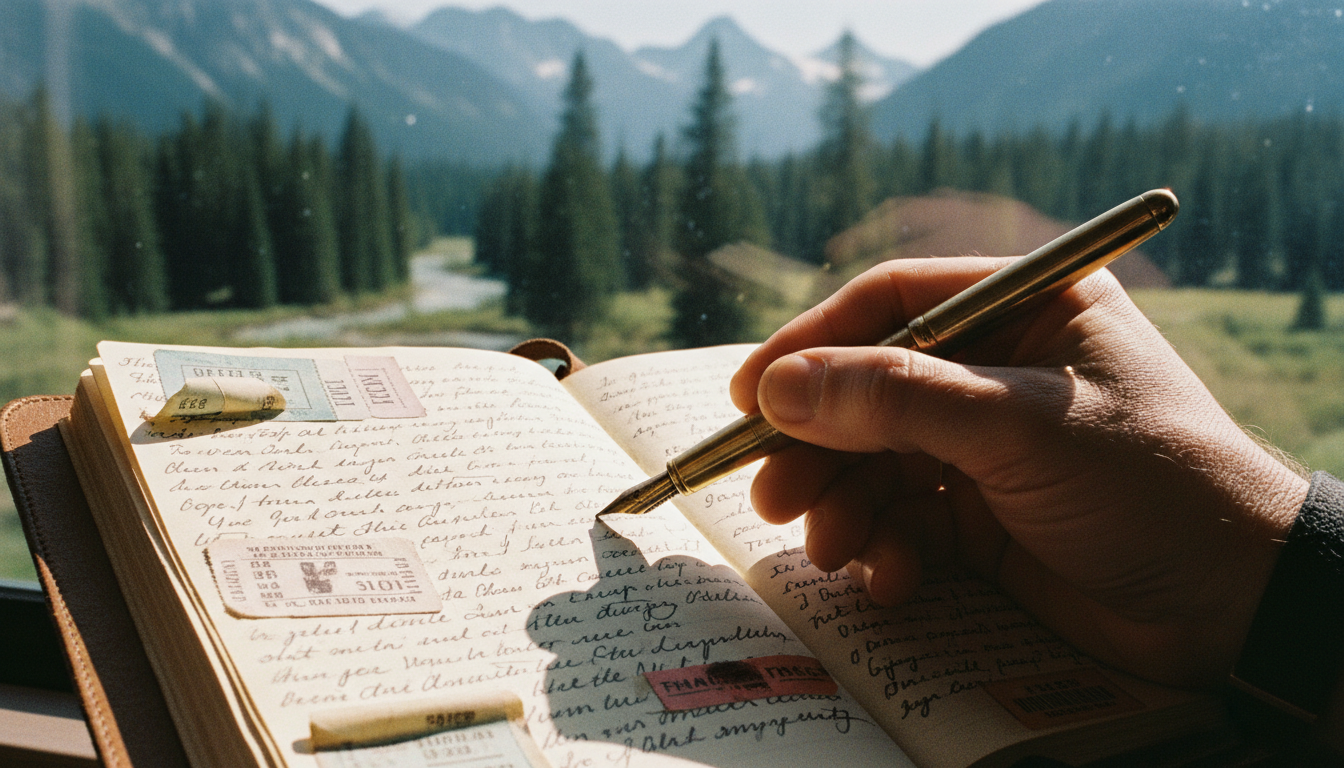
Building Your Toolkit: A Travel Journaling Guide to Gear
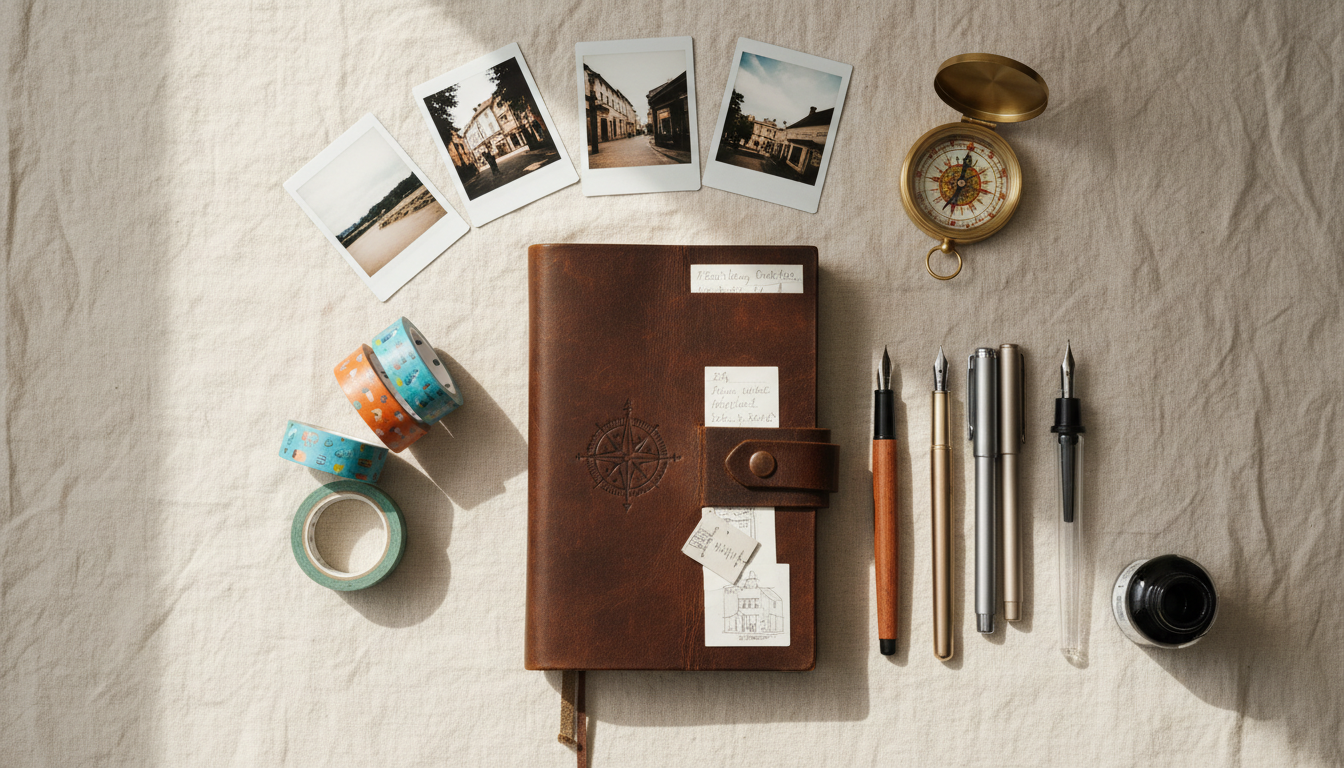
Before you write your first entry, you need the right tools. A common question I receive when sharing my travel journaling guide is: “What notebook should I buy?” The tool you use dictates your workflow and ultimately your commitment to the habit. Here is my personal breakdown of the ultimate journaling toolkit.
1. Selecting the Perfect Notebook
A high-quality physical notebook offers a romantic, tactile connection that digital screens simply cannot replicate. When searching for the ideal book to follow this travel journaling guide, consider the following:
- Size and Weight: An A5-sized notebook is the sweet spot. It is large enough to write comfortably but small enough to slide into a daypack or a large pocket.
- Paper Quality: If you plan to use fountain pens or markers, you need paper with a high GSM (grams per square meter) to prevent bleeding. I personally swear by dot-grid notebooks, which offer the structure of lined paper with the freedom of blank pages.
- Durability: Your journal will endure a lot. It will be stuffed into backpacks, dropped on sandy beaches, and occasionally splashed with coffee. A sturdy hardcover or a durable leather cover is a must in my travel journaling guide.
2. Essential Writing Instruments
Do not rely on the cheap plastic pens you borrow from hotel rooms. Part of this travel journaling guide philosophy is to make the act of writing enjoyable. I carry a primary fountain pen with waterproof black ink—crucial if you get caught in the rain—and a few colored fineliners to highlight dates, locations, and important memories.
3. Ephemera Adhesives
A true travel journaling guide would be incomplete without mentioning ephemera. I always carry a small roll of double-sided tape or a highly portable glue pen. This allows me to instantly stick boarding passes, museum tickets, and interesting business cards directly onto the pages.
Digital Travel Journaling Guide Alternatives
If you live a fast-paced digital nomad lifestyle, carrying physical books might feel burdensome. For the digital-first traveler, I recommend apps like Day One or Notion. They offer geo-tagging, instant photo syncing, and cloud backups. While they lack the charm of ink on paper, they are incredibly efficient. Whatever medium you choose, the core principles of this travel journaling guide remain exactly the same.
The Core of This Travel Journaling Guide: What to Actually Write
The biggest hurdle travelers face is the blank page. Staring at an empty white sheet after an exhausting day of exploring can be daunting. To overcome this, my travel journaling guide relies on a few structured techniques.
The 5-Senses Framework
When you sit down to write, do not just chronologically list what you did. “We went to the museum, then we ate pizza, then we went to the hotel” is boring to write and even more boring to read years later. Instead, this travel journaling guide champions the 5-senses framework. Describe the destination through sight, sound, smell, touch, and taste.
- Sight: The exact shade of the ocean at dusk.
- Sound: The cacophony of scooter horns in traffic.
- Smell: The scent of blooming jasmine outside your window.
- Touch: The rough texture of ancient cobblestones under your shoes.
- Taste: The complex spices in your evening meal.
Capture Dialogue and Encounters
People make the place. One of my favorite tips in this travel journaling guide is to document the people you meet. Write down verbatim quotes from your tour guides, the jokes shared with fellow backpackers, or the kind words from a local shop owner. These human connections are often the most profound parts of our trips but are the first to be forgotten.
Embrace the “Rapid Logging” Technique
Travel can be exhausting. There will be days when you simply do not have the energy to write a beautifully crafted essay. On those days, refer to the rapid logging aspect of this travel journaling guide. Simply jot down five bullet points capturing the most important moments of the day. You can always flesh out these brief notes into longer stories once you return home.
Visuals: An Illustrated Travel Journaling Guide
A picture may be worth a thousand words, but a picture accompanied by a story is priceless. Visual elements anchor your memories, breaking up the walls of text and turning your notebook into a multimedia scrapbook. You don’t need to be a professional artist to follow the visual aspects of this travel journaling guide.
Integrating Photography
Photography and journaling go hand in hand. If you have spent time learning travel photography tips to capture memories like a pro, your journal is the perfect place to showcase that work. I highly recommend investing in a portable pocket printer. Devices like the Canon Ivy or HP Sprocket allow you to print small, sticker-backed photos directly from your phone. Gluing a candid photo of a vibrant market right next to your written description of the smells and sounds creates an incredibly immersive memory.
Sketches, Maps, and Memorabilia
Even if you can only draw stick figures, sketch something. Draw a rough map of the neighborhood you explored, circling the cafe where you had the best espresso of your life. Paste in local currency, pressed flowers from a hike, or the coaster from a memorable pub. A fundamental rule of this travel journaling guide is that your journal should look lived-in and messy. Perfection is the enemy of authentic documentation.
Finding Time: A Practical Travel Journaling Guide Routine
The most common excuse I hear is, “I just didn’t have time to write.” My travel journaling guide tackles this by integrating writing into the dead space of travel. You do not need to carve out two hours in your hotel room. Instead, leverage the in-between moments.
The Morning Coffee Ritual
I am a strong advocate for the morning journaling session. Waking up 15 minutes before your travel companions to sit by a window with a cup of local coffee and your notebook is pure bliss. During this time, I write about the events of the previous evening and outline my excitement for the day ahead.
Journaling in Transit
Travel is filled with waiting. You wait for flights, you ride on long trains, and you sit in bus terminals. Instead of scrolling mindlessly on your phone, pull out your book. If you are ever wondering about the best things to do at the airport, writing in your journal should be at the top of the list. These transitional moments are perfect for reflection. The rhythmic motion of a train journey, in particular, always seems to loosen my thoughts and make the words flow more easily. Making this a habit is a core tenet of my travel journaling guide.
Reflecting on the Hard Moments
A crucial, often overlooked aspect of any honest travel journaling guide is the instruction to document the bad moments. Not every day of a vacation is perfect. You will get lost, you will miss connections, you will get food poisoning, and you will experience culture shock. Write about the frustrations. Documenting the challenges not only helps you process negative emotions in the moment, but when you look back years later, those disastrous days often make for the most hilarious and character-building stories.
Final Thoughts on Your Travel Journaling Guide
Ultimately, a travel journal is an act of deep self-care and preservation. By following this travel journaling guide, you are telling your future self that these days mattered. You are creating a tangible legacy of your life’s explorations, a physical artifact that holds the joy, the exhaustion, the flavors, and the epiphanies of your time on this earth.
Whether you choose a battered leather notebook or a sleek digital app, whether you write ten pages a day or a few bullet points, the most important step in this travel journaling guide is simply to begin. Do not wait for the perfect moment or the perfect pen. Embrace the messiness of the journey, put ink to paper, and start transforming your fleeting moments into enduring stories.