
Recommended for you
The Ultimate Guide to International Travel Etiquette: Mastering Cultural Norms
As an avid traveler who has spent years hopping from one continent to another, I can confidently say that the most valuable thing I pack isn’t my versatile wardrobe, my noise-canceling headphones, or even my high-end camera. Instead, the greatest tool in my arsenal is a deep, practiced understanding of international travel etiquette. I clearly remember my first major trip overseas, a backpacking journey through Southeast Asia, where I naively assumed that a friendly smile and a polite nod would universally translate into respect. I quickly learned that the world is a vast, complex tapestry of unique cultures, and navigating it requires much more than just good intentions. Exploring the globe offers the unparalleled joy of discovering breathtaking landscapes, tasting incredible cuisines, and meeting diverse people. However, this immense privilege carries a significant responsibility: the absolute duty to respect and honor the traditions and customs of the remarkable destinations we visit. This is where mastering international travel etiquette becomes not just helpful, but entirely essential. International travel etiquette is far more than a rigid, outdated set of rules; it is the very foundation of fostering goodwill and mutual respect between travelers and local communities. When we take the time to approach new environments with genuine cultural sensitivity and a solid grasp of international travel etiquette, we unlock much deeper connections and ensure our adventures are incredibly rewarding for everyone involved. In this comprehensive guide, I want to share the vital lessons I have learned over the years to help you master international travel etiquette, ensuring you are welcomed as a gracious guest wherever your passport takes you.
Understanding international travel etiquette begins with realizing that our own cultural norms are not the default setting for the rest of the world. What might be considered extremely polite in your hometown could be incredibly offensive in a different country. The beauty of international travel etiquette is that it forces us to step outside of our comfort zones and view the world through a completely different cultural lens. By embracing international travel etiquette, you show locals that you are not just a passive consumer of their homeland, but an engaged, respectful participant in their daily lives. Whether you are trying to navigate the complex tipping culture in North America, mastering the art of the formal greeting in Japan, or simply learning how to dress appropriately in the Middle East, a solid foundation in international travel etiquette will profoundly transform your journey. It prevents embarrassing faux pas, keeps you safe, and quite frankly, leads to much more authentic and beautiful travel experiences.
What Exactly Is International Travel Etiquette?
Before we dive into the specifics, we need to clearly define what we are talking about. International travel etiquette encompasses the conventional rules, behaviors, and unwritten social contracts that are considered polite and respectful within specific cultures across the globe. These nuanced codes govern absolutely everything from standard greeting styles, conversational volume, and dining manners, to appropriate street attire and public conduct. The immense significance of these norms cannot be overstated. A behavior deemed completely acceptable, or even friendly, in one region may be considered deeply offensive or aggressively rude in another. Grasping the delicate nuances of international travel etiquette is essential for any traveler wishing to navigate the world with grace, empathy, and respect.
A surprisingly common misconception among many tourists is that travelers are somehow exempt from local social contracts simply because they are foreign visitors. They assume that locals will automatically offer them a “tourist pass” for bad behavior. On the contrary, ignorance of international travel etiquette can lead to unintentional offenses, deeply uncomfortable situations, and a reinforcement of negative stereotypes about foreigners. Adopting a strict mindset of respect and a willingness to learn international travel etiquette not only reflects extremely well on your personal character but also honors the rich heritage and dignity of the places you are lucky enough to explore. It demonstrates that you value their home enough to learn how to properly exist within it.
Why Prioritizing International Travel Etiquette Completely Transformed My Travels
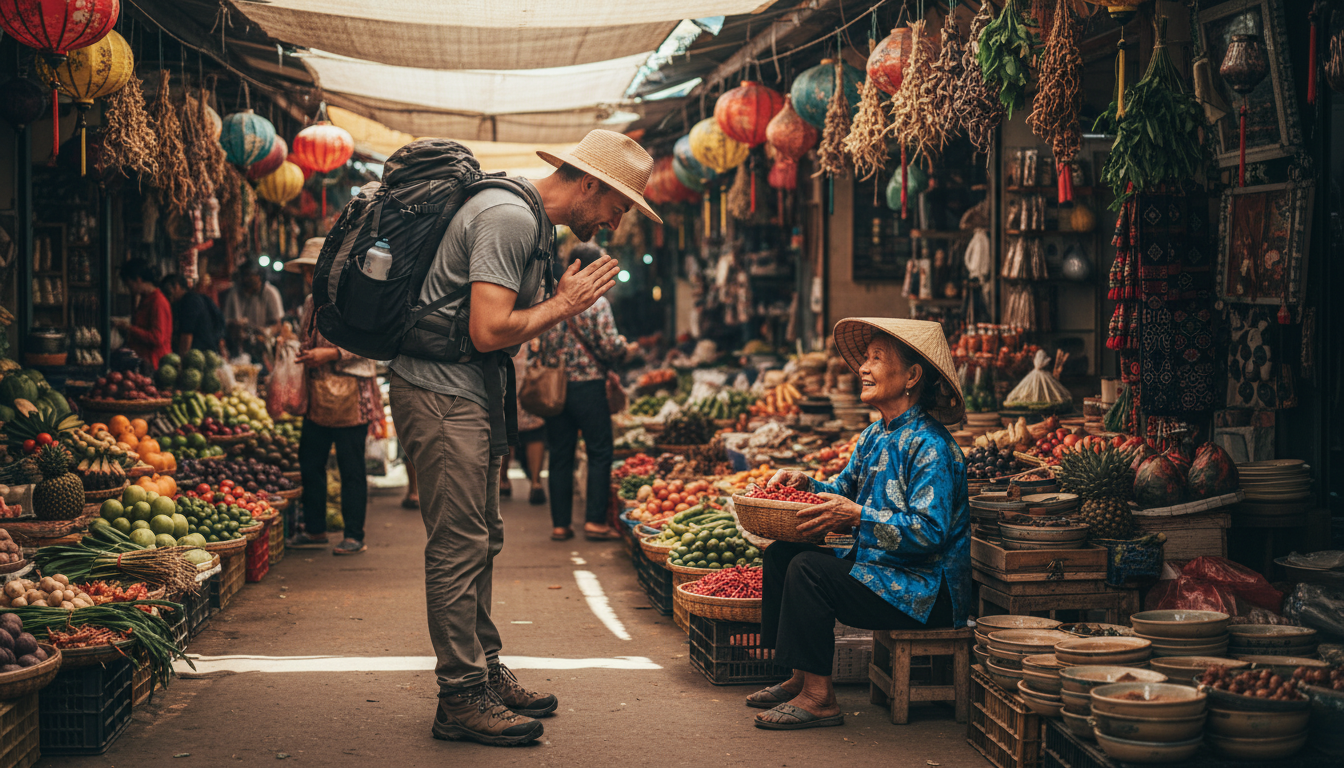
When I first started to seriously study international travel etiquette, I noticed an immediate, almost magical shift in how I was received by locals. Cultural norms vary drastically across the globe, and adjusting to them opens invisible doors. For instance, in many Asian cultures, a deep, intentional bow signifies profound respect, whereas a firm, confident handshake with direct eye contact is the standard in Western business and social settings. Dining customs also differ wildly; eating with your hands is traditional, communal, and highly polite in parts of India and the Middle East, yet it might draw shocked stares in formal European settings. Being intimately aware of these distinctions, which is the core of international travel etiquette, drastically enhances both your safety and your personal enjoyment.
Travelers who invest their precious time in learning local customs are almost always met with much greater warmth, patience, and hospitality. For example, understanding the intricacies of French dining etiquette—like keeping your hands visible on the table and never rushing a meal—can completely transform a simple dinner into an exclusive, highly respected culinary experience. The locals profoundly appreciate the obvious effort you make to conform to their high standards of politeness. When I took the time to master a few basic phrases and understand the local dining rules, I suddenly found myself being invited to family dinners, given secret recommendations, and treated like a visiting friend rather than an invasive tourist. That is the true, undeniable power of excellent international travel etiquette.
My Experiences: International Travel Etiquette by Region
One of the most fascinating aspects of international travel etiquette is how dramatically it shifts from border to border. To truly master international travel etiquette, you must become highly adaptable. Here is a breakdown of the key etiquette principles I have encountered and meticulously practiced in different regions around the world.
Navigating North America
In North America, particularly throughout the United States and Canada, the concept of international travel etiquette heavily revolves around punctuality, personal space, and the service industry. Tipping is an absolutely mandatory aspect of the culture. It is customary, and practically required, to leave a tip of 15-20% at restaurants, bars, and for various services like taxis and hair salons. Failing to do so is considered extremely rude. Furthermore, punctuality is strictly observed; arriving late to scheduled appointments or even casual social gatherings is often viewed as a blatant sign of disrespect for the other person’s time. Informal greetings, such as a bright, friendly “Hi” or “How are you?” are widely expected in most social contexts, even with complete strangers in retail stores. Mastering this specific brand of international travel etiquette ensures a very smooth trip across the Atlantic.
The Nuances of Europe
Europe is a massive, complex mosaic of cultures, each with varying, incredibly specific rules. However, certain elements of international travel etiquette remain fairly consistent across the continent. In countries like Italy, Spain, and France, dining etiquette dictates keeping both hands clearly visible on the table (with your wrists gently resting on the edge) rather than hiding them in your lap. Dress codes are also incredibly significant; modest and smart attire is highly expected when visiting religious sites, historic landmarks, or high-end establishments. Walking around a historic city center in sweatpants or overly casual “athleisure” wear is a surefire way to be immediately flagged as a tourist lacking proper international travel etiquette. If you are planning a trip to the continent, perhaps reading a comprehensive Madrid travel guide can offer specific insights into blending in beautifully with the local crowds.
Traditions and Respect in Asia
Asian etiquette is deeply steeped in thousands of years of tradition, making it a critical region for practicing flawless international travel etiquette. In Japan, bowing is the quintessential, everyday greeting. The depth and duration of the bow directly correlate with the level of respect being shown. Additionally, passing items—especially money, gifts, or business cards—should strictly be done with both hands to demonstrate care and respect. It is also absolutely crucial to research specific regional taboos. For instance, sticking chopsticks vertically into a bowl of rice is strongly associated with somber funeral rites in several Asian cultures and should be strictly avoided. Taking your shoes off before entering a home, and often even certain restaurants or temples, is a non-negotiable tenet of international travel etiquette in this region. Whether you are exploring the neon streets of Tokyo or spending 7 days in Singapore, honoring these traditions is paramount.
Warmth and Modesty in Africa and the Middle East
Hospitality is paramount and highly celebrated in these regions, presenting a unique set of international travel etiquette rules. In many African cultures, guests are treated with immense, sometimes overwhelming generosity, and refusing a gift or a serving of food can be seen as deeply insulting. In the Middle East, modest dress is absolutely essential, particularly for women, though men are also expected to dress conservatively by avoiding short shorts and sleeveless shirts in public. Public displays of affection, even between married couples, should be heavily minimized or completely avoided out of respect for local modesty laws and customs. Communication often relies heavily on subtle non-verbal cues. Crucially, using the right hand for eating, passing objects, and greeting is mandatory, as the left hand is traditionally considered unclean in Islamic cultures. This specific rule is a fundamental pillar of international travel etiquette in these beautiful regions, and adhering to it, particularly during a vacation in Egypt or Morocco, will keep you in excellent standing with your local hosts.

Practical Tips I Swear By for Mastering International Travel Etiquette
While the specific rules change depending on your coordinates, there are a few universal strategies you can employ to ensure your international travel etiquette is always impeccable. These are the practices I rely on for every single trip I take.
- Extensive Research Before You Go: Never step onto an airplane without consulting quality guidebooks and highly credible online resources to deeply understand the specific dos and don’ts of your upcoming destination. Knowing the baseline international travel etiquette before you arrive saves you from immediate embarrassment.
- Keenly Observe Local Behavior: When in doubt, strictly mimic the locals. I spend my first day in any new city sitting in a cafe, quietly observing how residents interact in public spaces. This provides the absolute best real-time, highly accurate guide to acceptable behavior and subtle international travel etiquette.
- Learn Basic, Essential Phrases: Mastering a few simple but crucial words like “thank you,” “hello,” “excuse me,” and “please” in the local language demonstrates a genuine, heartfelt effort to connect. It shows profound respect for the host culture and is the absolute cornerstone of good international travel etiquette. Memorizing some essential travel phrases will get you out of countless awkward situations.
- Dress Conservatively and Respectfully: It is always better to be slightly overdressed than uncomfortably underdressed. Blending in sartorially is a major component of international travel etiquette, signaling that you respect the local standards of public presentation.
Common Mistakes in International Travel Etiquette You Must Avoid
Even seasoned travelers can slip up, but knowing the most common pitfalls in international travel etiquette can help you avoid them. One massive mistake is assuming English is universally spoken and becoming visibly frustrated when it isn’t. Good international travel etiquette dictates that you always ask, politely and in the local language if possible, if the person speaks English before launching into a rapid-fire question. Another frequent error is completely ignoring local queuing or lining up customs. In the UK, queue jumping is practically a cardinal sin, while in other parts of the world, getting on a bus might be a bit more of a chaotic free-for-all. Pay close attention to the crowd. Finally, taking photographs of locals, especially children or indigenous communities, without explicitly asking for permission is a severe breach of international travel etiquette and basic human decency. Always ask first, and gracefully accept a “no” if they decline.
How International Travel Etiquette Enhances Sustainable Tourism
There is a powerful, undeniable link between practicing good international travel etiquette and engaging in responsible, sustainable tourism. When we talk about sustainability, we often focus solely on the environmental impact—reducing plastic use, offsetting carbon emissions, and protecting wildlife. However, cultural sustainability is equally vital. By adhering strictly to international travel etiquette, you are actively helping to preserve the dignity, traditions, and psychological well-being of the local communities. You ensure that tourism does not become an extractive, damaging force, but rather a mutually beneficial exchange. I highly recommend pairing your knowledge of international travel etiquette with a deep dive into a comprehensive sustainable travel guide to ensure your global footprint is entirely positive. It is our collective duty to ensure that the places on our travel bucket list remain vibrant and culturally intact for generations to come.
Conclusion: Embracing the World with Open Arms and Respectful Habits
Ultimately, being deeply mindful of international travel etiquette is absolutely essential for a truly fulfilling, enriching, and respectful journey. By consistently making the conscious effort to understand, internalize, and adhere to local cultural norms, you do much more than simply avoid offending people. You actively enhance your own personal travel experience, invite genuine human connections, and meaningfully contribute to a thriving global culture of mutual respect and peace. Travel, at its very best, is a beautiful bridge between incredibly different worlds. I urge you to let your impeccable behavior, guided by a strong sense of international travel etiquette, serve to strengthen that connection every single time you pack your bags. Remember, the world is a shared space, and good manners are the universal language that everyone, everywhere, can deeply appreciate.